Brooke from Brooke Appetit recently took over our Instagram. She shared a recipe with us and also a little more about the dairy that she and her husband live and work on in Buckeye, Arizona. Her husband, Clint, is a fourth generation farmer at Saddle Mountain Dairy. Clint and his dairy focus on keeping their dairy cows comfortable even during the hottest of months. Special misters are installed in their cow barns which keep it down to a cool 85 degrees Fahrenheit even when it’s 110 degrees outside.
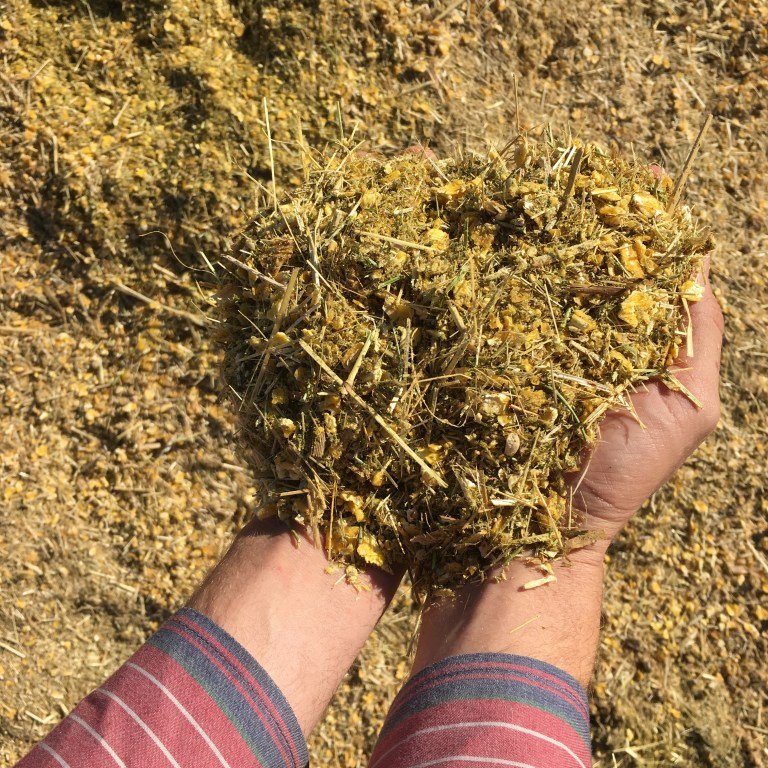
Not only is temperature a focus but proper nutrition also sorts itself to the top of the priority list. A mixture of hay, grains, vitamins, and minerals is fed to their cows to ensure they are healthy while producing healthy milk for us to use. To get the full recap of the day, head over to the Arizona Beef Instagram page and check out our highlights. In the meantime, we wanted to make sure you could make Brooke’s delicious creation at home so here is the recipe!
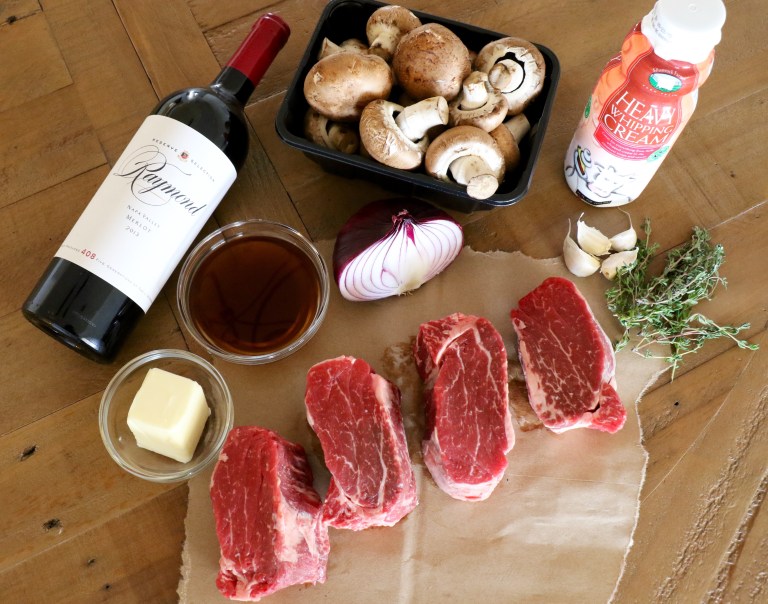
Fancy Night In: Filet Mignon with a Mushroom Wine Sauce
Ingredients
6 Tbsp butter, divided
4 Tbsp olive oil, divided
16 oz baby bella mushrooms, thickly sliced
1 small or 1/2 medium red onion, finely diced
4 medium garlic cloves, minced
2 Tbsp chopped fresh thyme ( reserve a few sprigs for garnish)
4 Beef Filet Mignon steaks (about 2” thick)
1/2 cup a good Cabernet or Merlot you would drink
1 1/2 cups low sodium beef broth
1/2 cup heavy whipping cream
Salt and Pepper to taste
Method
1. Place a large cast iron pan over medium/high heat and melt 3 Tbsp butter and 2 Tbsp oil. Add mushrooms and cook 3-5 minutes until soft. Stir in onion and cook another 3 minutes. Press in garlic cloves then season with salt, pepper, and freshly chopped thyme. Cook another 2 min, stirring constantly until garlic is fragrant, then transfer mushroom mixture to a plate. Wipe the skillet clean with a wet paper towel.
2. Pat dry steaks with a paper towel and season all over with sea salt and cracked
pepper.
3. Place the same pan over medium/high heat and add 3 Tbsp butter and 2 Tbsp
oil. When butter is hot and finished foaming, add seasoned steaks to skillet,
turning over once with tongs, about 3-5 min per side for medium-rare. To best determine doneness, use an instant-read thermometer and utilize these helpful tips. If steak is browning too fast, reduce heat to medium. Use tongs to transfer steaks to the
plate with mushrooms. Also, keep in mind thinner steaks will cook faster and thicker steaks can take longer.
4. Add 1/2 cup wine and boil until reduced by half (3 minutes), scraping the bottom
with a wooden spoon to deglaze the pan. Add 1 1/2 cups broth and boil until about 2/3 cup liquid remains (5-6 minutes). Add 1/2 cup of cream and boil until sauce thickens slightly (2 minutes). Return mushrooms and steak to the pan and heat until warmed through (1-2 minutes)
Season sauce to taste with more salt & pepper, if desired. Serve immediately. Plate the steak and sauce over some creamy mashed potatoes and a side of steamed asparagus.
Enjoy, friends!
Brooke will be back with us again soon! Stay tuned!
This blog is a repost from our friends over at the Diablo Trust. This particular post was written by a cowgirl named Sheila Carlson who has worked on the Flying M Ranch for 10 or so years and before that worked on the Bar T Bar Ranch. She’s a horsewoman from Utah and is a good hand on a ranch. Enjoy some thoughts from her perspective on caring for the land.
The myth of the rancher who is out to make a buck by letting his livestock damage and destroy public lands is far from the truth as I know it.
In reality ranchers care more about the land and the waterways than most people I’ve come across. They make their living off the lands and over-grazing it is NOT something that is done.
They carefully monitor the land, use grazing rotations, watch for invasive and non-native species of plants and work closely with local agencies to maintain a positive impact on the land. Many times they will not use a pasture in their rotation because they feel there isn’t enough growth or moisture and would rather let it rest than use it.
They are the ones hauling water during drought times, not only for their livestock but for the wildlife in the area. The run-off from winter snows and summer rains flow down ditches they maintain, to fill water tanks and flow into lakes.
This isn’t something that nature has created in most places; this is something that they have worked hard at accomplishing each year. Those ditches need to be cleared and cleaned. The same with those water tanks that provide a life source for so many different species.
Without the rancher taking time, money. and effort, those same water tanks would fail.
There are so many scare tactics out there, so many un-truths being spread and the saddest part is that so many will believe what they are told without questioning the source.
Speak to your local rancher if you have a question. Treat them as you would like to be treated; don’t just assume they are the “bad guy.” I think that people would find out they have a common interest when it comes to care of the land . . .
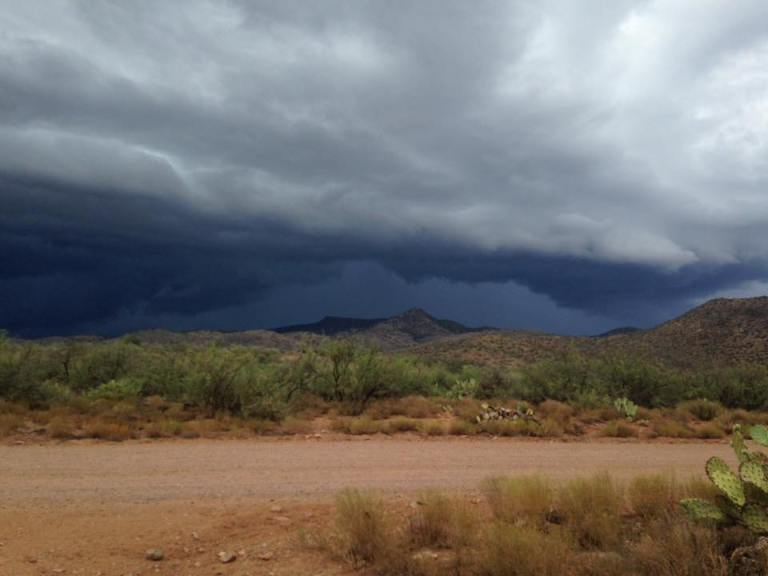
Arizona summers are brutal, to say the least, with reprieve arriving only when you catch sight of dark clouds forming on the horizon, smell a hint of moisture in the air, and the mesquite trees start to rustle as a late afternoon wind tickles their branches. The afternoon monsoon has arrived and if you listen closely, you can almost hear the desert sigh in relief.
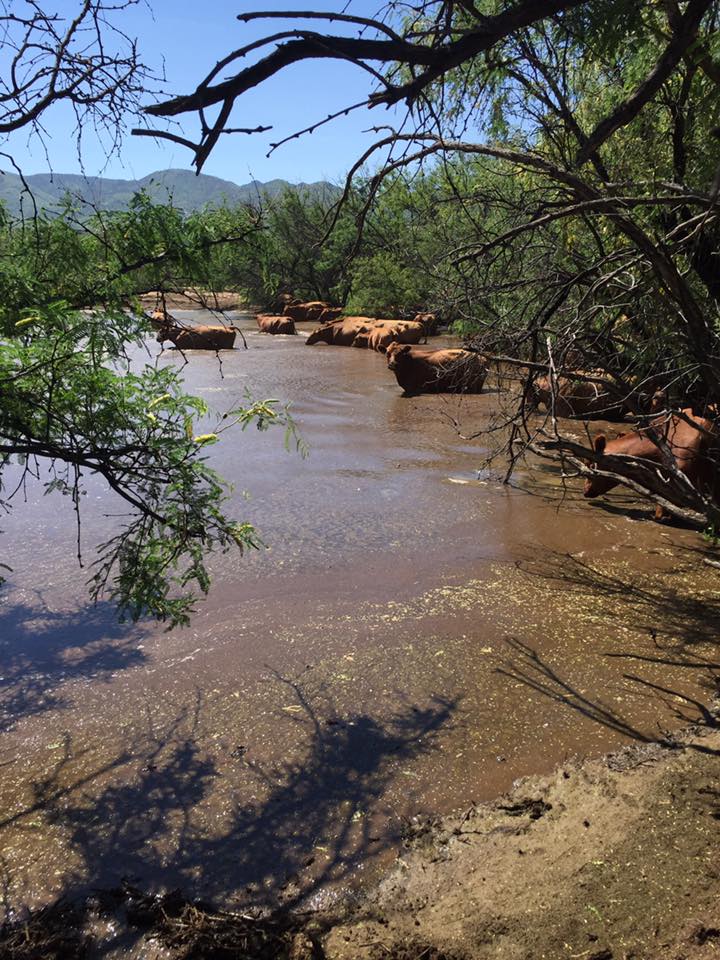
Monsoon season is a big deal in our state for the average person but proves essential to the cattle rancher. These life-giving rains replenish basin groundwater, recharge riparian areas, give life back to summer grasses, and fill dirt tanks essential for wildlife and cattle alike to survive. Once the rains hit, gone are the days of trucking water to the far reaches of the ranch, as mother nature lifts one small burden off the shoulders of hard-working cattlemen and women.
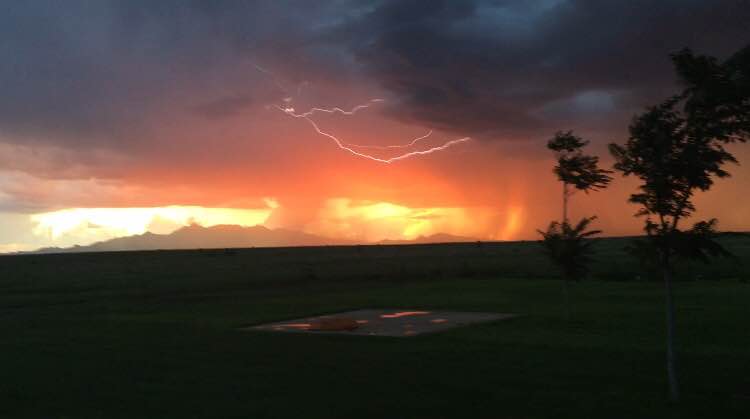
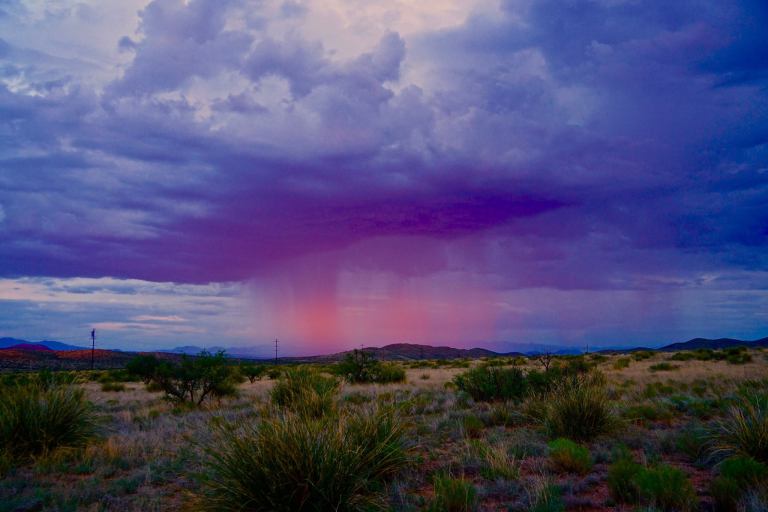
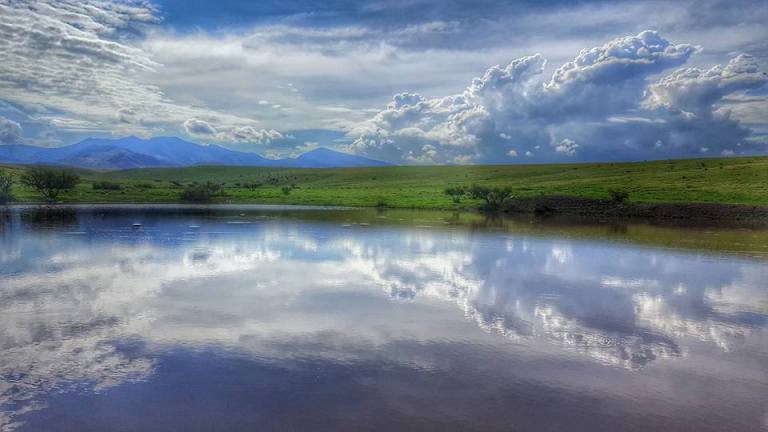
Enjoy this round-up of Arizona monsoon photos from ranches across the countryside in honor of another monsoon season.
Photo by Cassie Lyman of the Hat Ranch in Gisela, AZPhoto was taken at the Cross B Cattle Ranch in Elgin, AZPhoto by Jolyn Smith of Texas Canyon Brangus in Dragoon, AZPhoto by Micaela McGibbon of the Santa Rita Ranch outside of Green Valley, AZPhoto by Santana Nez of the G Lazy 8 Ranch. Photo was taken in Tucson, AZ.Photo by Sarah Henckler King of the King’s Anvil Ranch outside of Tucson, AZPhoto by Tina Thompson of the C Bar Ranch in Willcox, AZPhoto by Tina Thomson of the C Bar Ranch in Willcox, AZ
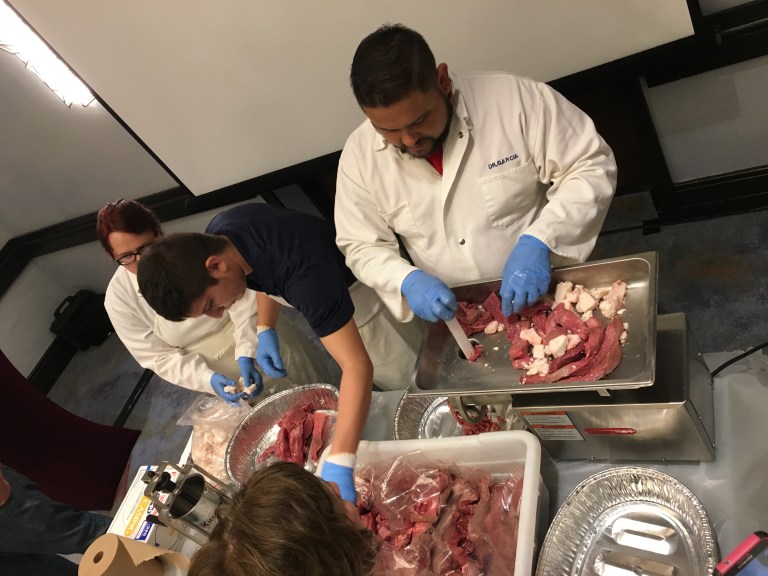
One group of teachers working on their beef sausage entry to the contest.
The smell of beef cooking filled the meeting room at the Loews Ventana Canyon Resort as teachers bustled about, working to prepare the perfect beef sausage. The 2017 Career and Technical Education (CTE) conference was underway, and the Beef Sausage Making course was the highlight of the schedule. Annually, teachers gather from across Arizona to participate in learning opportunities in order to bring more knowledge back to their classrooms to extend to their students. These CTE teachers were from the culinary, food service and family and consumer science departments of their respective high schools.
In July, Tiffany Selchow and Lauren Maehling, Arizona Beef Council (ABC), with Shayla Hyde, ABC intern, along with University of Arizona Food Product and Safety Lab Director Dr. Sam Garcia led a group of 30 teachers in a three-hour-long session. They presented a lesson on Beef 101, as well as a section on processed meats: where it comes from and how it is made. Following the lesson, Dr. Garcia led the teachers in making their very own beef sausage. In this session, the teachers also received the first opportunity to apply for the Beef Up the Classroom grant which reimburses teachers for beef purchases.
Dr. Sam Garcia and students taught teachers how to grind and stuff sausage.
The teachers were split into groups of three with access to an array of spices and ingredients for flavoring and about an hour and a half to do it all. The teachers collected their beef trimmings and Dr. Garcia, along with two of his students, ground the meat. The teams created a recipe and mixed in their seasonings. It was all stuffed into casings and then cooked to be presented for sampling and judging. The sausage was judged and enjoyed, and the winners were announced.
The winning teachers were Pattie Pastor and Catherine Marshall from Flagstaff High School and Stephanie Adams from Casa Grande High School. They each were awarded a griddle, hand-grinder, and stuffer for their classrooms.
Seasoning is an important part of the equation for a delicious beef sausage!
With this experience fresh in their minds, the teachers could incorporate their learnings into their lesson plans and even build a curriculum around the outline of the workshop. The teachers left with extra sausages and smiles on their faces.
The summer of 2017 had been one for the books. I ended the hardest semester of my life in Spring of 2017 and then dove into the Arizona Beef Council internship shortly after.
I heard about the internship through my high school agriculture teacher. I thought I would apply along with a few other internships but this one stood outs as it looked like a great learning opportunity and a chance to broaden my horizons. I was sure I would get one of the other internships but was not as confident about this one. A stream of doubt ran through my head. “How, out of all the animal science majors and agriculture giants, would I, a journalism major at Arizona State University, land this internship?” Well, I did, and I can say it had been the best internship of my college career.
My first impression
First, I didn’t realize there would be two interns, and I was a little intimidated by the idea of my counter part; a University of Arizona student majoring in animal science. Was she mean? Did she buy into the rivalry between the UA and ASU and would that affect our relationship? I didn’t know what to expect. Luckily, all of my worries were blown out of the water when I meant my colleague. She is a hard working and committed individual whom I have grown to love and call my friend over the past two months.
Lauren Maehling, myself, Nicole Van Eerd and Tiffany Selchow at the start of the internship (Photo by Anna Aja)
Then I met my bosses. While I was under the guidance of the Arizona Beef Council staff, I was fortunate to interact with folks from the Arizona Cattle Growers Association, and they all have taught me more about the beef community in two months than I have learned in my 20 years on this earth. They also taught me the importance of effective communication and building relationships with consumers and growers alike.
The Field Trips
Sometimes I still can’t believe was part this internship paid me to go out with my intern compadre, to meet new people and learn more about the beef world in a real-life setting.
First, we went to the Bill Kerr Dairy and visited with Wes Kerr. He explained that just like so many before him, he is using the latest methods and technology to have a successful dairy business. We were lucky enough to see the process of collecting milk from the cows and even go to the barn where the calves reside.
Next, we went all the way down to Nogales, AZ where Dan Bell and Dean Fish took us in and showed us their worlds. We spent half the time on the Bell’s ranch, helping round up cattle, branding, vaccinating and gathering some less-than-compliant horses. Mr. Fish took us horseback to see the Santa Fe Ranch with the bonus of an explanation of the mysteries of life. He also explained how every rancher has different methods of raising cattle, but the goal is still the same: raising cattle in an efficient and safe way to make consumers feel good about what they are eating and to have happy cattle. We left with words of wisdom in our pockets for our future careers.
Tagging calves at ZZ Cattle Company (Photo by Dan Bell)
I grew up farming with my dad and other members of our family. The sights and smells of alfalfa and cotton were the norm, along with the sounds of squealing pigs coming from the show pig barn at my house. I never really considered myself as a cowgirl mostly because I didn’t know what that really meant. I was a farm girl and a pig girl but not a cowgirl. Thanks to the efforts of Dan and Dean, I was able to discover who cowboys and cowgirls are. They are not just individuals who buy a pair of boots and a felt hat, walking with some sort of saddle swagger; they live and breathe cattle. It’s a way of life and a source of income. I will be forever grateful to have had the honor to live in that world for the short time that I did.
Nicole and I embarking on our ride with Dean Fish (Photo by Dean Fish)
Then, we came back up to Pinal Feeding Co. in Maricopa, AZ. Our fearless chauffeur, Caline Gottwald, showed us the ins and outs of running a feed yard. It was incredible to see the sheer number of bovine on the property and the massive amounts of feed rations it takes to feed them. Feedlots may not be as glamorous as the dawn rising over the hills of a cattle ranch, but their role in raising beef for consumers is just as important as any other part of the beef life cycle.
It was fascinating to see how well kept the facilities are and the amount of care paid to all the cattle. Feedlots generally have a vet on staff and a nutritionist who make sure the cattle are kept healthy and thriving. Of course, life happens and sometimes it can be hard to work on a feedlot when things are not going according to plan, but I am confident that these devoted individuals do everything they can to prevent and protect their animals.
Nicole and me at the Arizona/Mexico border in Nogales (Photo by Dean Fish)
Lastly came the tour of the JBS Beef Plant in Tolleson, AZ. Our energetic tour guide, Maria, took us through the various stages of meat processing and explained to us the importance of handling the meat safely as well as treating the cattle humanely when they come to their facility. It was an eye opening experience where I learned how my beef came to be from the farm to the table, and I can confidently say I am proud of where my beef comes from.
Convention and Other Fun Events
I had the opportunity to serve as an intern at the Arizona Cattle Growers Association Convention in Prescott, AZ. There, I talked with cattle ranchers from all across Arizona and learned a bit more about how beef is raised in my home state. It was an amazing opportunity to network and connect with the dedicated ranchers in the Sonora desert.
ACGA Convention Intern Mackenzie Kimbro and I at the Steak Fry Dinner and Dance (Photo by Heidi Crnkovic)
I also went to the Arizona Academy of Dietetics and Nutritionist Conference in Phoenix, AZ with Lauren. I was a little unsure how beef promotion would go over in a room of nutritionists, but the results were pleasantly surprising. I was able to communicate my love of beef and its nutrient value to many people and I was able to learn about their health concerns as well.
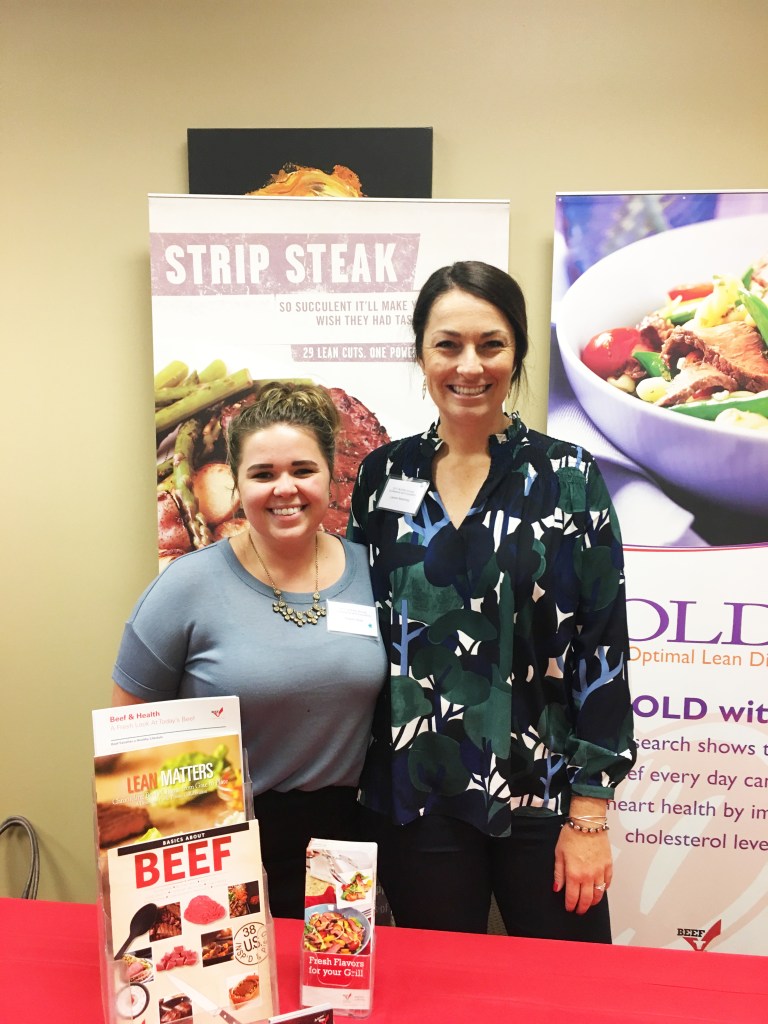
Lauren and I at the ABC booth at the AZAND conference
We also went along on the Summer Agriculture Institute where teachers came to learn a little more about where their food comes from and how they can bring that knowledge into their classrooms. Coming from a strong agriculture background, I sometimes forget how little those who do not have the opportunities I have had know about animal and crop production. It was neat to see the important messages cattle ranchers like Andy Groseta had to share about the hardships of raising cattle but that it was worth the end result: food on the table.
Takeaways and Thank Yous
From knowing little about the beef community in Arizona to annoying my family friends with the copious amounts of knowledge I have gained over the summer this experience is something for which I will forever be grateful. I feel I am more educated and can address more consumer concerns about how beef is raised.
I have never felt more welcome and appreciated for my efforts as I have at this office working with Lauren, Tiffany, Heidi, Maria, Kim, Patrick, and Bass. I have made unforgettable memories which I will cherish through the years. From porcine to bovine, I love all meat; but remember Beef…It’s What’s For Dinner.
Lauren, myself, Nicole and Tiffany at the end of the internship (Photo by Heidi Crnkovic)
In March of 2017 I was just your average college student: persistently bugging my professor for more work with cattle out at the feedlot, telling every high school student (and even some 10 year olds) how amazing college (the University of Arizona, of course) and Animal Science is, working at a cattle sale barn, spending every paycheck on my horse’s never ending credit line, dreaming of being back out on the ranch, and making plans for graduate school and a future in the beef community… ok, so maybe not your average college student. But, I was just going through my spring semester with a page long list of all the possibilities for my rapidly approaching summer when my old agriculture teacher, my boyfriend, my best friend, a professor, and several others all told me to apply for the Arizona Beef Council Internship. I looked it up, saw social media, and closed the screen. But after thinking, praying, and, I admit, mostly persuasion, I applied. A phone call interview, follow-up with references (the plus of working for cowgirls in high school is they are very stubborn, very persuasive, and thus the perfect reference), and a few months later, I arrived at the office in downtown Phoenix. Yes, DOWNTOWN PHOENIX! I said a quick farewell to dreams of cool weather and countrysides, then quickly smiled with astonishment and excitement that it was honestly me being blessed with this incredible opportunity to intern for the Arizona Beef Council. This is how the next nine weeks went; well, a very condensed version anyway. (I invite you to read the past AZ Beef blogs to learn more!)
The ability to work on ranches and be directly involved in the beef community has fueled my passion and understanding towards it.
The first week, Shayla and I were able to join other agriculture leaders and 30 teachers for the Summer Agriculture Institute, a program that teaches kindergarten through 12th-grade teachers about agriculture in Arizona. The intent is to provide the educators with information and resources on how they can incorporate agriculture into their curriculum to educate today’s youth. While I do work with Ag in the Classroom, teaching kindergarten students is very different than teaching adults, and this week further developed my passion for educating Americans about the truth of agriculture and the beef community. Some of the stops included Andy Groseta’s ranch where teachers learned the importance of the relationship between cattle grazing and the health of the environment, a discussion with a forest ranger on the health of our forests, and a dinner with representatives from the Diablo Trust. It was a rewarding experience as we witnessed many of the teachers transform their opinions about agriculture and clear up misconceptions.
Summer Ag Institute teachers getting personal encounters with Holstein steers at Heiden Land and Cattle.
In the following weeks, we worked in the office with amazing members of the beef community. We gained knowledge in communication, including how to utilize social media and online applications to create graphics, find the correct information, and interact with consumers both online and in person. We developed an understanding of the importance of selecting proper word choice and facts to tell the beef story in an honest yet non-offensive way. It was an eye-opening education. I have been involved in the production side of the beef community, including courses at the University of Arizona taught by esteemed professors, and while I continually interact with people not familiar with agricultural production (including my family), I had not realized the importance of reading one’s audience, selecting proper words, and being transparent and objective in telling the beef story. I also was unfamiliar with the full expanse of misinformation, biased articles, anti-agriculture organizations, and other information that is readily available and promoted to lead consumers astray. My passion for the beef community and telling its story continues to grow every day.
Tiffany, Lauren (not pictured), and I dropped off beef jerky bouquets on National Jerky Day to promote beef, one of the numerous ways the AZ Beef Council works to link Americans with the beef story.
In addition to working in the office, Shayla and I were fortunate to attend different events as interns including the Women in Agriculture Conference and the Arizona Cattle Growers’ Association (ACGA) Convention. At the Women in Agriculture Conference, we learned more about future challenges that the agriculture community will face, the importance of women’s roles both in the family and in production, and how to reconnect with consumers and producers not involved in organizations. One highlight was an inspiring presentation by a couple who were refugees from Africa and now own a farm in Arizona.
The Golos told an inspiring story of faith, perseverance, and dedication to the cause of family and agriculture.
At the ACGA Convention, we were privileged to join many individuals involved in the Arizona beef community. As policies were re-evaluated, current issues were tackled, and connections were made, we saw firsthand how the beef community works to ensure its success along with everyone involved while working to continuously improve how cattle are raised and how we care for rangelands. It was beneficial to hear diverse opinions and explanations for why certain practices are done the way they are done. I also enjoyed seeing current issues that the beef industry is facing and how they handle them. I am very passionate about being involved in, and educating consumers about, the beef community, and this opportunity to work for and interact with numerous individuals in different aspects of the beef community was inspiring and extremely informative. There was a lot of fun, and a lot of education and this experience truly attested to the diversity and team work incorporated into the beef community. I was honored to help contribute to making convention successful.
After long days of meetings and discussions, ACGA hosts a steak dinner and dance. Katie Bell and I pictured here getting everything ready.
I have Clay Parsons from Marana Stockyards to thank for hiring me and helping develop my cattle background.
This amazing internship also gave us the opportunity to meet influential and successful individuals and families in the beef community, which included working tours at beef facilities as well as the rewarding task of representing these families and their stories in Arizona Beef blogs. The first stop on our industry tour was the Kerr Family Dairy in Buckeye, hosted by Wes Kerr. Wes amazed us with his focus on animal welfare and a progressive mentality. He described how his grandfather never imagined the day when all dairies would have shades, and now technology has come so far to include Wes’ work with progressing genetics to have all polled (hornless) dairy cattle. Wes’ dairy was a beautiful example of superior animal care, attention to consumer demands and industry needs, and a progressive mentality. Thank you, Wes!
Wes explained the importance of cattle rations (feed mixes) and how ingredients are selected to create the best results in cattle while utilizing by-products to reduce waste.
The next stop was a week-long vacation (err, long, grueling work week? In case Tiffany is reading this maybe I shouldn’t brag) down in Nogales with cattlemen Dan Bell and Dean Fish. We were blessed to join them in their daily ranch life, including the opportunity to gather cattle; brand, vaccinate, test, ear tag and castrate calves; ultrasound and palpate cows to check pregnancies; and perform other cattle management practices that ensure proper cattle records, health, and care. We also experienced monitoring and caring for the rangeland including proper fencing and cattle grazing rotation systems. We heard incite on the different ways of handling cattle to match individual ranches, including how to reduce stress for maximum productivity. We also attended the Southern Arizona Cattle Protective Association (SACPA) meeting and learned about current issues facing the beef community including the US-Mexico border, disease, and water regulations. It was an insightful opportunity to learn about different ranches and their management plans, and a refreshing break to be back out on a ranch. Mr. Bell and Dr. Fish were inspiring resources, sharing every detail of their work, showing us their challenges and successes, and giving us wisdom and advice for a joyful life. Thank you, Dan and Dean!
Vaccinations are a crucial step in ensuring cattle health and a safe beef supply. Administration techniques are chosen based on ranch facilities and the best fit for individual practices and cattle health, and I was overjoyed to help.
Our next stop on touring the beef community was at Pinal Feeding Co in Maricopa. From the cow-calf ranch to the feedlot, this transition helped us learn about feeding cattle and the details involved. We learned more about cattle nutrition and how rations are made and delivered to provide the best care and results from cattle, including the importance of feeding at the right time of day. We learned about the complexity of technologies in managing and keeping records of cattle, as well as caring for sick cattle. Thank you, Bass and Caline! Afterward, we were privileged to tour the JBS Beef Processing Plant in Tolleson where we saw the care that workers take in supplying us with wholesome, safe, and healthy beef. I was impressed by the information our food safety tour guide explained to us. Every step of the process is carefully monitored with safety procedures, health and quality tests, and employees passionate about their jobs and the positive difference they make. Beef truly is a product we can feel safe, and good, about eating, knowing that it is raised with continuously improving sustainable practices, provided to us by families who care and is a delicious and nutritious source of food for ourselves and our families. Thank you, Maria!
Holstein steers are fed personalized rations to maximize health and gains, with a carefully balanced mixture of forage (hay), grains, and supplements (including minerals and protein).
The beef community tours were not only enjoyable but also an educational look into the Arizona beef community and what the beef story truly is. From the promotion aspect in the office, to a dairy, to a cow-calf ranch, to the feedlot, to the packing plant, and with several stops to look at policies, regulations, issues, and development, I loved experiencing every piece of the beef story and hearing insight from a variety of farmers and ranchers with different backgrounds, scenarios, and ideologies. This experience increased my ability and desire to share the beef story and how cattle are raised by families, for families, in the most sustainable way, ensuring the health of cattle, the environment, and families.
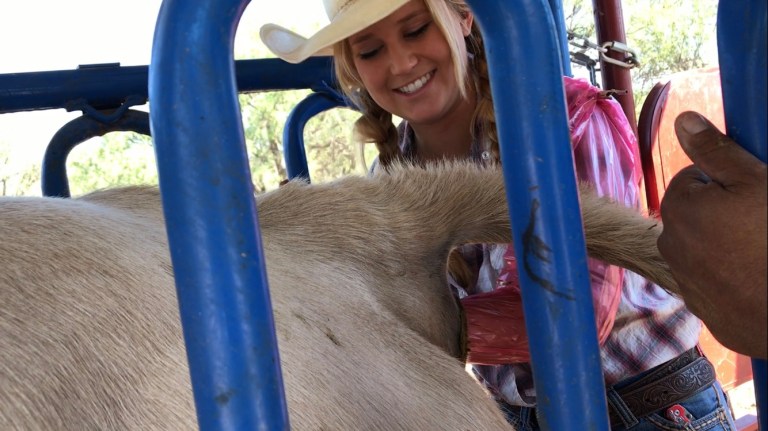
An important management practice on a cow-calf ranch is checking cattle pregnancies, and one method for this is palpation.
Overall, I cannot begin to express how rewarding my internship with the Arizona Beef Council was. I am incredibly blessed not only to have the amazing experience to learn from and interact with numerous individuals, families, and businesses in the beef community but also to be able to give back and assist in outreach and education to consumers. I gained endless skills and fueled my always growing passion for the beef community. And to top it all off, I was able to work with some of the nicest, most intelligent women in the beef community. One final thank you to everyone who encouraged me to apply for this amazing internship, to the committee who selected me, to my fellow intern and partner in crime Shayla, and to Tiffany and Lauren, my outstanding leaders, who I had seen present several times and never could have dreamed of the amazing opportunity to work with. And of course, thank you to the beef community. Eat beef, it’s what’s for dinner.
Lauren, Shayla, myself, and Tiffany, the Arizona Beef Council summer team (family).
Welcome to the beef community, where fellow members of the community are not merely associates, but good friends and family. Need an example? Dean Fish from Santa Fe Ranch and Dan Bell from ZZ Cattle Co., also known as the Dynamic Duo. Here at the Arizona Beef Council office, our intern pair, Shayla and Nicole, also consider themselves a “dynamic duo,” and set out to spend a week with the aforementioned pair to experience Arizona ranching life and the hard work involved. Enjoy their story of their week working in this segment of the beef life cycle!
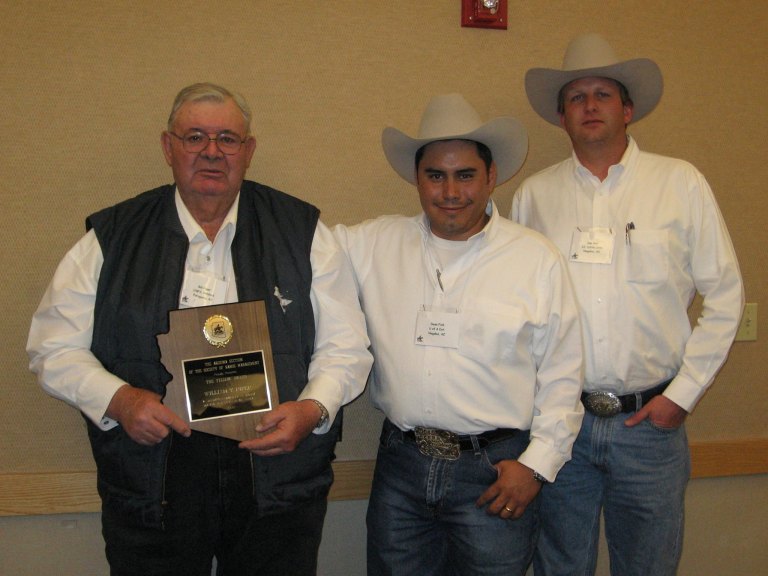
Dean Fish (middle) and Dan Bell (right) are well-known names in the beef community both for their wonderful personalities, and for their experience, knowledge, and contributions to advancing and protecting the beef community.
For two girls who love cattle, horses, and agriculture, there is no way to describe how excited we were to spend a week in Nogales, AZ helping Dan and Dean on their ranches. Not only was it going to be wonderful being back out on horseback gathering cattle, but we were also blessed to spend time working with two extremely knowledgeable cattlemen learning their reasoning behind everything they do to raise cattle, and gaining insight on the beef story as a whole.
Nicole and Shayla in their alternative office. The Arizona Beef Council internship offers the amazing opportunity to work on education and outreach as well as traveling work hands-on in the beef community.
Day one, we arrived in Tucson with the honor of attending the Southern Arizona Cattlemen’s Protective Association (SACPA) to represent the Arizona Beef Council and share information about the beef checkoff with the side benefit of experiencing firsthand how issues in the beef community are handled. We heard debates, opinions, personal experiences, and propositions from representatives from all aspects of the beef community. We were impressed by the efficiency and careful attention to making the best decision for all members of the beef community, the cattle, the environment, and consumers. Next, we headed to Dan’s beautiful family ranch house (well, we drove ourselves, and quickly learned we both were significantly lacking in our navigation skills.) Dan gave us a small tour of his ranch, followed by a delicious beef dinner and a history of the ranch, Nogales, and what it is like to ranch along the Mexican border. It only wet our taste buds for the millions of questions to come.
The border between Mexico and America. A very small section has this high fence, while most of the border along the ranching land is simple posts and barbed wire.
Day two, we rose bright and early (there will always be a strong appreciation for western cattle growers who must rise at 3 a.m. and earlier to beat the heat and reduce stress for their horses and cattle) to head out and gather cattle on horseback with Dan and some other hands. He explained how he gathered and rotated cattle to benefit their individual needs in each stage of life, as well as properly manage the rangeland. Then, without hesitation, we jumped right in with the others to sort cattle, brand, castrate bull calves, ear tag, keep records, and vaccinate against common diseases. Dan explained his methods and reasoning behind these practices with the intention to provide the best care and health for his herd, and how individual ranchers choose their methods of work to best fit their ranch conditions including herd size and available labor and facilities. Afterward, we helped test the calves for BVD-PI (Persistently Infected-Bovine Viral Diarrhea. Calves that test positive contracted this virus as a fetus, and it inhibits their ability to fight disease. They shed the virus to healthy calves and cattle the entire time they are present in the herd.) This experience helped solidify the importance of record keeping and proper Beef Quality Assurance practices to ensure consumer safety and confidence in beef. Dan spoiled us afterward with the best apple pie (oh, and a healthy beef lunch too) and we saw more of the ranch as we distributed salt to the cattle. Along the way, we bombarded poor Dan with every question we could think of about the rangeland, neighboring ranches, relations with Mexico, cattle care, and his interactions with, and we aren’t lying, Agent Hamburger, a border patrol agent. That evening we joined in a barbecue, meeting more of the Bell family and friends and enjoyed good company, good food, and more learning (including a lesson for Dean on why you should never mess with giant black bugs; ask him next time you see him, you won’t be disappointed). It was a great way to wrap up a day of learning and appreciation for hard working ranchers who still live everyday family lives.
Vaccinations are a crucial step in ensuring cattle health and a safe beef supply. Pictured is Nicole administering them to a calf.
Shayla is ear-tagging a calf, a vital component of record keeping and animal identification to maintain proper care.
Day three, we rose early again to head over to Dean Fish’s ranch (still solidifying our need to enhance our navigation skills) where we saddled up and rode out to collect cattle. This time, we brought in the cows and used ultrasound equipment to check if they were bred (it is important to know when cows are bred in order to keep proper records, know when to expect the calves, know which bull the semen came from to help with genetics or herd improvement, and for overall knowledge of the herd.) Along the way, Dean explained the science behind his methods for managing and caring for cattle. He explained how keeping stress levels low allows for the best feedback and response from the cattle, whether giving vaccinations, breeding or performing other care. We were both given the opportunity to palpate a pregnant cow and feel the fetus, afterward hearing Dean’s reasoning behind using ultrasound, and how there are several other options for checking the health of pregnant cows, all with their own positive and negative features, that can be selected to fit any management style. We then rode out to learn Dean’s style of working and checking cattle, checked some waters, and again asked our many questions. It was a unique experience to compare two neighboring ranches and see how quickly the rangeland, facilities, and cattle needs can change and why it is essential that ranchers understand their cattle and their ranch to develop a management plan and provide the best care. After a wonderful, authentic Nogales lunch and dessert (Shayla was already making plans to drive back down to enjoy it again), we drove along the border and were informed about additional impacts of ranching with Mexico as a fence-line neighbor. Afterward, we returned to Dan’s to check more waters and fences (including an on-foot chase after a rogue cow that helped Nicole find a new appreciation for deciding to run cross-country back in high school).
Their are several ways to check a cow’s pregnancy, and many ranches use palpation to feel the cow’s progress. (Featuring Shayla)
An important management practice on a cow-calf ranch is checking cattle pregnancies, and one method for this is palpation.
Day four, we woke up with heavy hearts as this was the day we headed back to Phoenix but excited to seize our final hours in southern Arizona. We saddled for the last time to gather horses that had been turned out (if you think this sounds easy, we suggest you go home and watch Spirit), then we were able to help vaccinate them. Afterward, we checked more waters (an essential part of this job during the summer), took our final tour of the ranch checking gates and fences. We saw the direct impact of regulations to stop grazing in certain areas and how it created adverse effects due to the benefit of grazing and its history in the West (remember, before the introduction of cattle, bison roamed the west and grazed similarly). The example Dan showed us was a riparian stream that consistently had an area of water housing an endangered fish species. For decades, this area was included in a large pasture utilized by cattle, but one day a dead fish was found and Arizona Game and Fish restricted grazing in this area. Sadly, the reduced grazing caused forage to grow rapidly, including trees and shrubs, and quickly the entire stream dried up, killing all of the fish in the area. This unfortunate consequence was a strong lesson on why it is important to understand the fragile balance in an ecosystem and how every action, including grazing, has a role in maintaining the ecosystem. We also learned the impact of predators and other threats to livestock. Our trip culminated with a farewell lunch headed back up to Phoenix, dreaming of our next chance to be back out on the range. After much pressure, we refused to announce a favorite day as both ranching experiences were phenomenal!
Nicole and Shayla LOVE beef, and dairy too!
Overall, our week with Dan and Dean was a once-in-a-lifetime experience. Not only did we gain hands-on experience working with cattle, but also learning there is a deep reasoning behind every management strategy and practice implemented by ranchers, as well as the issues they faced in the past, and still face today. Furthermore, we learned how cattle interact with the environment and how regulation and how other confounding circumstances including border security and international relations impact the beef community. With new insight on the beef community, we are now back in the office working to continue to educate America on the ways of the beef community and how we continue to find new ways to serve our cattle, the land, and consumers best. Thank you, Dan and Dean, thank you to the Arizona Beef Council, and most importantly, thank you to the beef community for all you do!
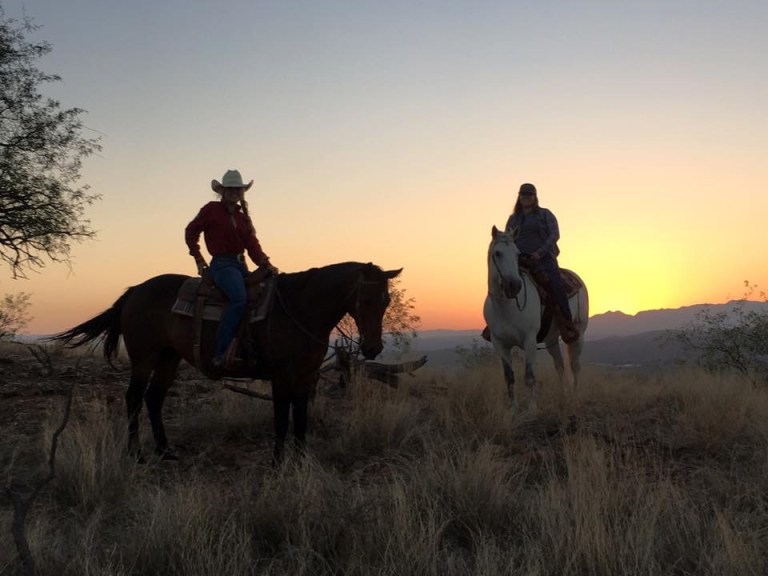
There is no experience more treasured for these two beef interns than watching the sun rise while out gathering cattle by horseback.
Blog post by Nicole Van Eerd and Shayla Hyde, Arizona Beef Council 2017 Summer Interns.
Ranch Location: 15 miles northwest of Congress, Arizona off the Date Creek Road.
Arizona Beef: Tell us about your ranch. The Murphys: The OX Ranch is a desert ranch consisting of 65,000 acres of private, BLM, and Arizona State Trust land located 80 miles northwest of Phoenix, Arizona. The ranch also leases a 30,000-acre summer grazing allotment in the Coconino National Forest south of Flagstaff, Arizona. We are a cow/calf ranch with 650 Black Angus, Hereford, and Brahma-cross cows, using Angus bulls of a diverse genetic base. Operating in harsh desert conditions, our goal is to produce a smaller-framed animal needing less forage to sustain itself, the ability to thrive in high temperatures, calve unassisted on the open range, and the genetic potential to grade choice or prime at the harvesting facility.
Animal health is a primary focus. The ranch has been an active participant in the Beef Quality Assurance Program for many years and is registered with Premise ID, and the National Animal Identification System.
What have you done to improve the ranch? The OX Ranch has an enormous amount of history and through work with various partnerships (i.e. Natural Resources Conservation Service, Arizona Game and Fish Department, U.S. Fish and Wildlife Service – Partners for Fish and Wildlife Program, U.S. Forest Service, Arizona State Land Department, University of Arizona and UA Extension Service, and the Prescott Audubon Society) we have been able to take a run-down and abused ranch in the desert and return it to a healthy state, both economically and environmentally. A few completed projects include the eradication of invasive species in two riparian areas, the fencing of three riparian areas to allow controlled grazing, the placement of solar pumps on desert wells to assure reliable water for cattle and wildlife, and much more.
What are some common misconceptions that you think people may have about the way your raise your beef on your ranch? It is our belief that few individuals in the state realize how many ranchers work to improve the health and productivity of the land they’re managing.
How does wildlife benefit from the improvements made to the ranch? We enjoy the many varieties of wildlife and love seeing our winter flock of Canada geese fly overhead several times daily. The geese, as well as our deer herd, are seen in the alfalfa fields regularly. Both lakes attract waterfowl year around, and a pair of blue heron have taken up residence. All the watering facilities on the ranch have access for wildlife in compliance with NRCS specifications designed to protect all kinds of desert dwellers. All new cross-fencing is wildlife friendly with smooth lower wires. Quail nesting habitat was created by piling up vegetation removed from the fields, offering protection from predators. An island was constructed in the lake to promote safety for ground nesting waterfowl.
Many trees have been planted for birds, and provide a continuous route from the lake, along the fields, and on down through the riparian area. As recommended by the U.S Fish & Wildlife Service, this assures connectivity of habitat – an important aspect for birds. Audubon Arizona, in their state publication, recently identified 5 Arizona birds whose numbers have declined from 63%-93% due to loss of habitat and development. Maintaining ranch lands was cited as an important way to counteract this trend.
What practices on the ranch have made a difference in how you raise cattle? Many practices have affected our ranching business, with the sustainability of the land always key to those efforts. Just the investment in numerous water facilities, including 20 solar well pumps, 9 well pumps on grid power, 57 stock ponds, 26 water storage tanks, 138 drinkers made from metal or concrete along with 150 miles of fencing, 150 miles of dirt roads, and 43 miles of water pipeline, has enabled the use of thousands of additional acres of grazing land by cattle and wildlife, allowing for a more consistent annual impact. We have been able to increase our herd size, and have modified our grazing methods and rotation of pastures to improve forage health. By employing the most stringent health practices available and having the willingness to scrutinize and invest in herd bulls that are both geographically suited to our area, and have the best genetic makeup for our specific needs, we have made significant improvements in herd and carcass quality. All these steps have translated into higher production and greater profitability in the product we market.
What is the most important piece of information that you would want people to know about you and the work you do on you ranch every day? We have a passion for caring about the land and caring for the land – that is what ranchers have done historically and continue to do.
If you could describe in one word the life of a rancher, what would it be? John – Hard work
Joan – Commitment
Cowboys and cowgirls, alike, spend long days outside in the elements, working hard to raise healthy cattle. But we can’t do this job alone. It takes a whole slew of tools to ensure we get the job done correctly.
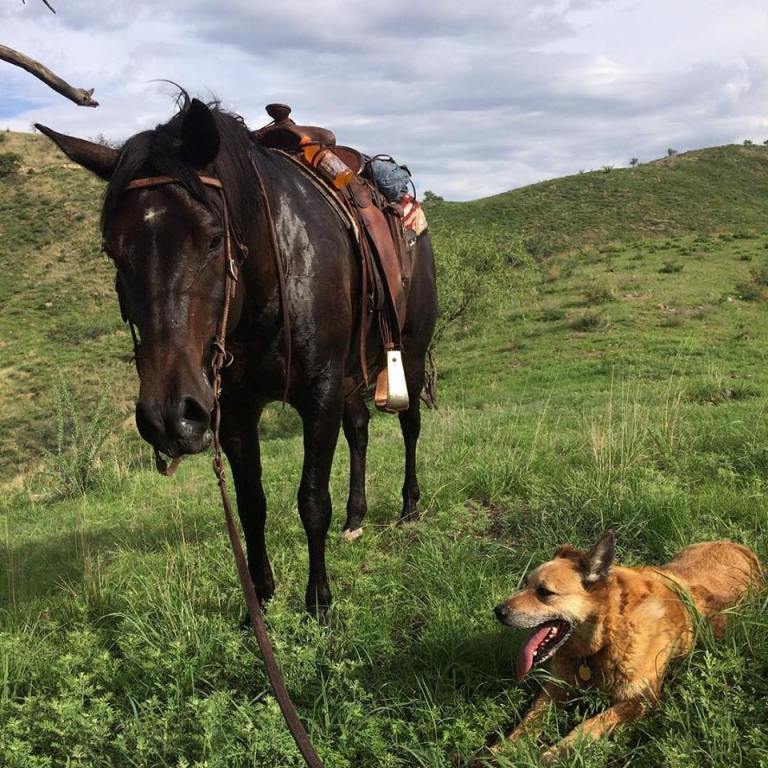
Horse
One of the most important tools is our horse. Our horse is our partner, mobile office, and catch-all for every other tool we’ll need. A horse gets us around the ranch more efficiently than if we were to go on foot and is often the brawn behind the brain when calves need to be doctored and there aren’t cattle handling setup for miles around.
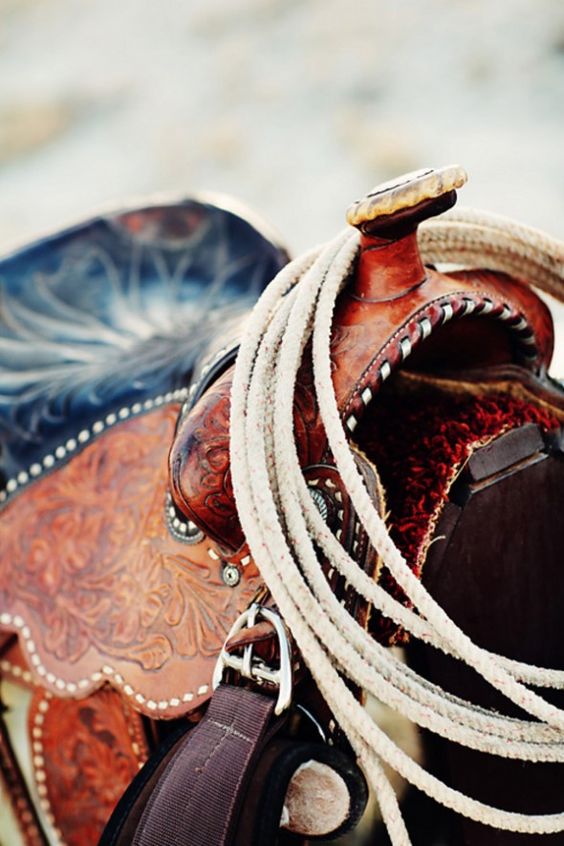
Saddle
The saddle is where we sit while riding our horse. It provides much-needed comfort for both horse and rider and is also a handy place to tie on ropes, jackets, bedrolls and other tools needed through a day on the range.
Saddle Blanket
This important piece of equipment is a layer of protection between the stiff leather on the saddle and the horse’s back. Think of this as a cushy seat cover over a hard wood chair.
Stirrups
The stirrups are attached to the saddle and are where we put our feet to help with stability in the saddle on a long day’s ride.
Cinch
This important piece of equipment runs from one side of the saddle to the other and ensures it stays on the horse while riding. The cinch is one item you want to make sure is in good shape every time you ride; otherwise, your saddle can roll right off your horse!
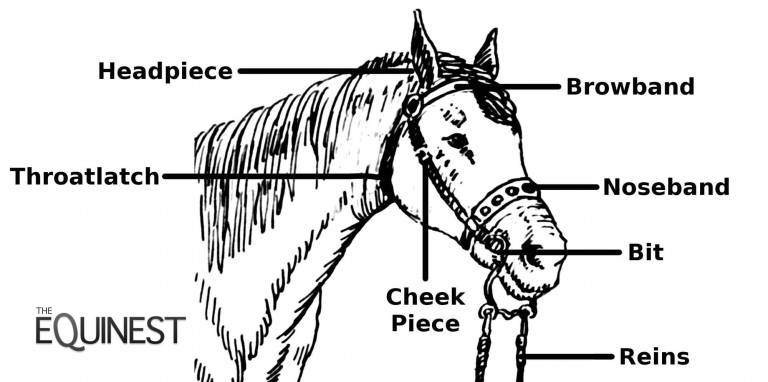
Bridle Reins
The reins connect to the bit acting as a steering wheel and a braking system. They allow us to communicate with our horse to tell them which direction we need to travel and when we want to stop.
Bit
The bit is like an air traffic controller. It takes the signals from our hands and transmits that information to our horse. The bit sits in our horse’s mouth between their teeth.
Headstall
The headstall holds the bit on your horse’s head. Without the headstall, the bit and the reins wouldn’t work!
Rope
Most cowboys have a rope tied to their saddle when they head out to work each day. The rope allows us to catch a cow that might be sick and needs treatment or a calf that is brand-new and needs identification.
Dog
Some folks use a dog to help gather and move cattle from pasture to pasture. A well-trained dog can be directed by voice signals to move from one side of the herd to the other, allowing the dogs to push the cattle towards the destination we have in mind. Dogs are also very helpful for flushing cattle out of hard-to-reach places, like under low-hanging trees or narrow creek beds.
Clothing
Fashion isn’t the first thing we have in mind when deciding our clothing for the day. We need to ensure the utmost comfort and flexibly in our attire because you never know what might come around on that day.
Hat
Here in Arizona, a good hat is essential. Ideally, we want something that has a wide brim all the way around the head so we can keep the sun off our face and shoulders.
Bandana
A bandana is also helpful in keeping the sun off our faces, but can also be used if there is a lot of dust being kicked up by our cattle.
Thick shirt
Just like the chaps help to protect our legs, a long-sleeved shirt made of a thick material is essential to help keep the prickly plants off our skin. The material choice is also important because it gets hot here in Arizona. A cotton shirt is ideal because it helps us to keep cool through evaporation from sweat while also protecting our skin from the sun.
Chaps
Chaps are made of sturdy leather and cover our legs. These are extra important in places like Arizona where cactus and pointy plants tend to reign. The leather of the chaps keeps our legs from being scratched.
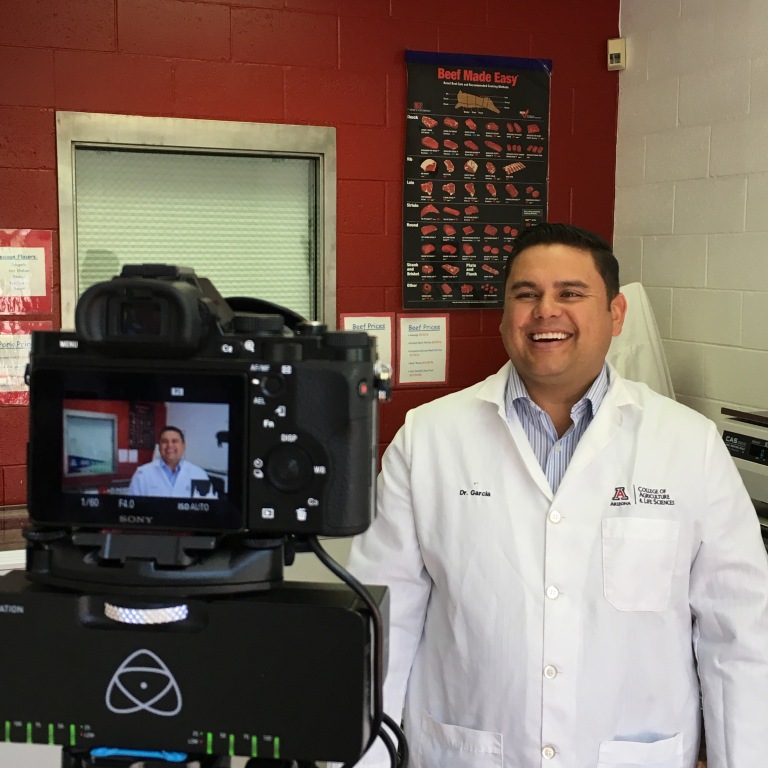
As a perk for our blog readers, we are offering an exclusive, behind-the-scenes sneak peek look at a special video project we are working on! Lauren, Tiffany, and Ben Spitzer of Silo & Co Productions, just finished up traveling 469 miles in two days to capture the vast amount of knowledge Arizona beef farmers and ranchers have to share with the families who enjoy a delicious steak and want to know how it was raised.
The Arizona Beef Council is dedicated to sharing the story of Arizona Beef. We like to watch the short videos on Facebook and Instagram just as much as the next person, so this project seemed like the perfect way to expand our reach! Enjoy these photos from the trip and be sure to check back soon!
Special thanks to Dr. Sam Garcia of the University of Arizona Food Product and Safety Lab, Dean Fish of the Sante Fe Ranch, The Bell Family of ZZ Cattle Co., The McGibbon Family of the Santa Rita Ranch, Bass Aja of Pinal Feeding Co., and Wes Kerr of Kerr Dairy for your hospitality and willingness to share your knowledge with us! And of course, thank you to Ben Spitzer of Silo and Co Productions for your creativity, knowledge, and patience.





 Enjoy, friends!
 The myth of the rancher who is out to make a buck by letting his livestock damage and destroy public lands is far from the truth as I know it.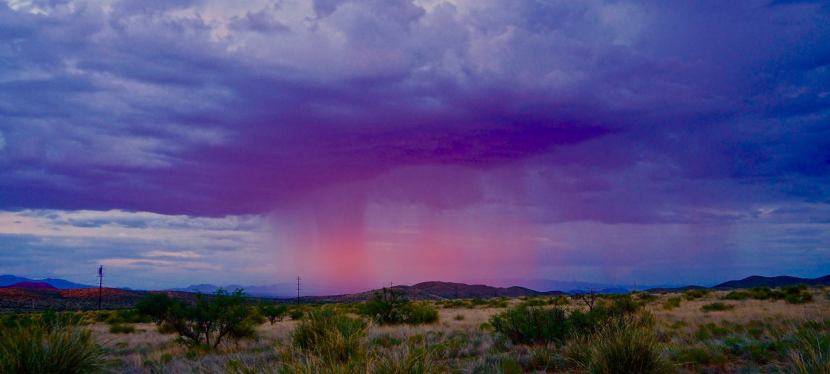






















 Arizona Beef Blog