2017 Summer Agriculture Institute


Another successful week is coming to a close for the Summer Ag Institute. Every year, the University of Arizona Maricopa County Extension Office, along with other representative organizations including the Arizona Beef Council, plan a weeklong agriculture tour for kindergarten to high school level teachers from all over Arizona. Teachers fill out applications, and thirty are selected each year as participants of the tour to learn about the Arizona agriculture community surrounding them. This knowledge is then passed on to students within their classrooms.
IMG_8794
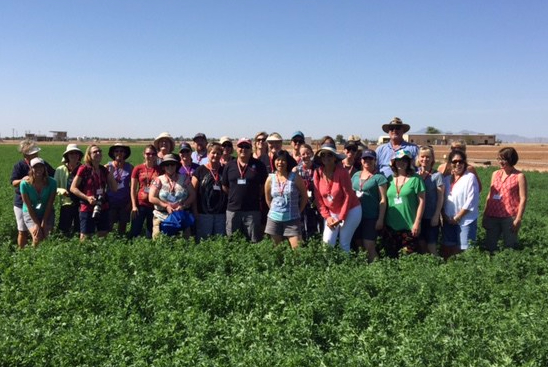
The 2017 Summer Agriculture Institute participants in an alfalfa field at the Maricopa Ag Center.

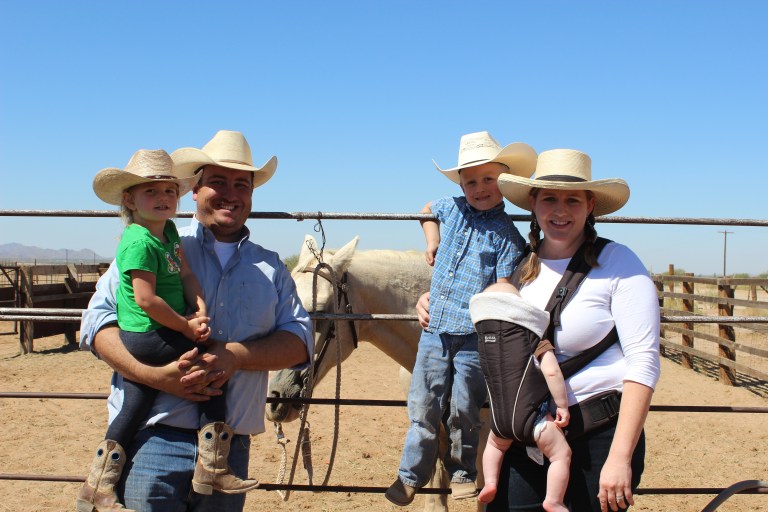
This year, teachers experienced a variety of agriculture community aspects including the Arabian horse wonder known as Los Cedros USA, the University of Arizona Maricopa Agriculture Center and its research, various crop farms, and livestock ranches. They ended the week by splitting into small groups and spending a few hours enjoying a genuine, hands-on experience of everyday farm life with local farm families, followed by an intensive workshop on incorporating what they have learned about agriculture into their curriculum.

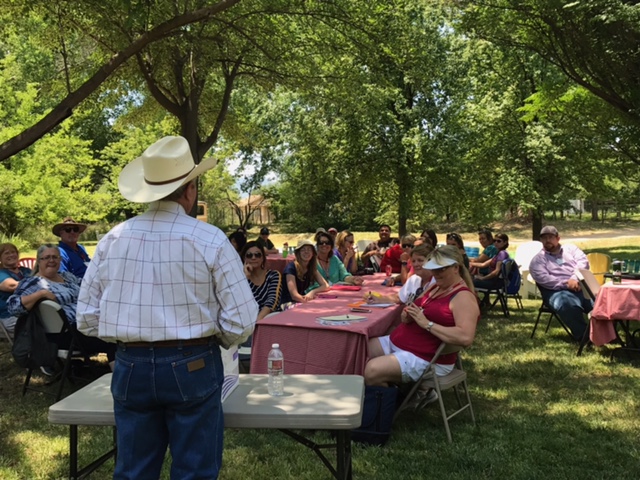
The tour was also a beneficial representation of the Arizona beef community. On Tuesday, the teachers visited the Groseta W Dart Ranch where they learned about raising cattle and how ranching intertwines with the economy and environment. Andy Groseta explained to teachers, “We are the only nation on the face of the earth where you can go to any store on a Monday and ask for any food you want in any quantity and get it by Friday. The only thing stopping you is your pocketbook. We are very efficient at what we do, and that was not an overnight thing; it started in 1776.” As he discussed ranch activities, his fifth-generation family ranch tradition, and his love for the land and his cattle, teachers gained insight on this piece of the beef community. Tracey Dodrill from Cocopah Middle School told us this stop was her favorite, “I loved meeting the Groseta family and learning that ranchers are people just like me. I want to be adopted into their family!” The ranch was a great transition into a delicious meal at Roux 66 and a discussion with the Diablo Trust which further highlighted the beef community’s dedication as environmentalists to raise healthy beef while taking proper care of livestock and the environment while involving consumers.

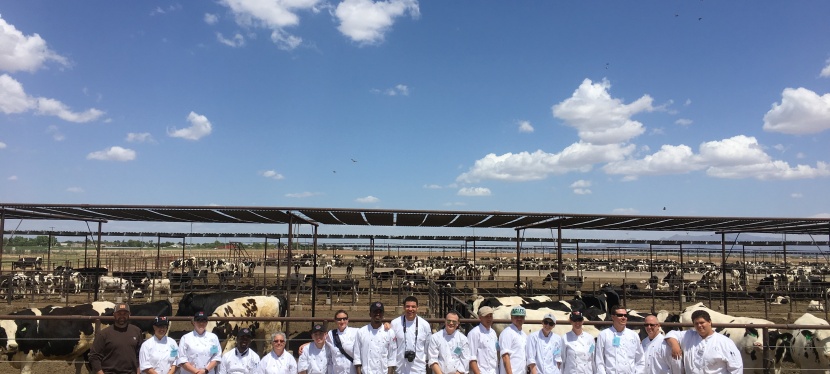
Wednesday included a stop at Perkinsville Meat Processing, followed by Thursday’s tour of Heiden Land & Cattle and Triple G Dairy. At Heiden Land & Cattle, Paul Heiden took the teachers on the next step in the beef raising journey by giving a tour of his feedlot.  He explained how they raised Holstein steers with a carefully calculated diet, and answered questions about cattle feed, the beef product, and animal welfare practices including Beef Quality Assurance procedures. “We care a lot about our cattle and what they are eating, and consult a nutritionist frequently. We don’t do what we do just for regulation; we do it for the wellness of our cattle,” Paul shared.

0608170922c_HDR
Paul Heiden educating teachers on the importance of the cattle’s diet and grain processing, comparing whole and steamed corn.

After stopping at the Triple G Dairy, teachers were able to add learning the differences between the Holstein and Jersey breeds, seeing the stages of each cow’s life from calf to milking cow, and witnessing firsthand the dairy’s state of the art technology including a milking carousel, to their list of experiences. One teacher, Suze Manci, commented: “I now understand why producers do what they do. They have a passion for feeding you, and they have to be able to do that.”
IMG_8818
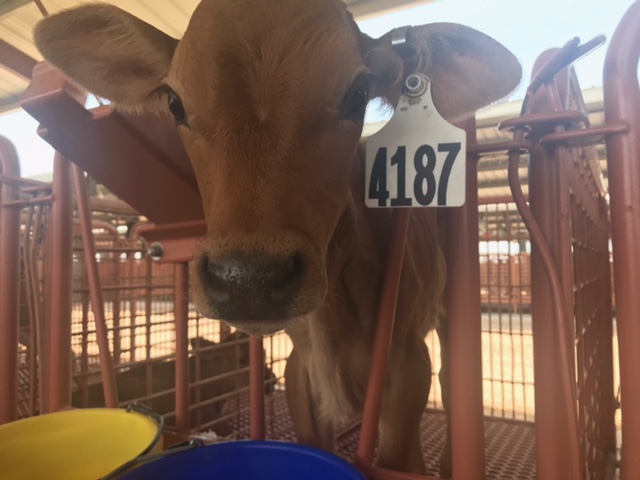
A Jersey calf at Triple G Dairy, definitely one of the teachers’ favorite stops.

Members of the beef community were given the opportunity to showcase their family business, explaining how they raise their animals and add to their unique piece of beef’s gate to plate journey while answering teachers’ questions.
IMG_8814
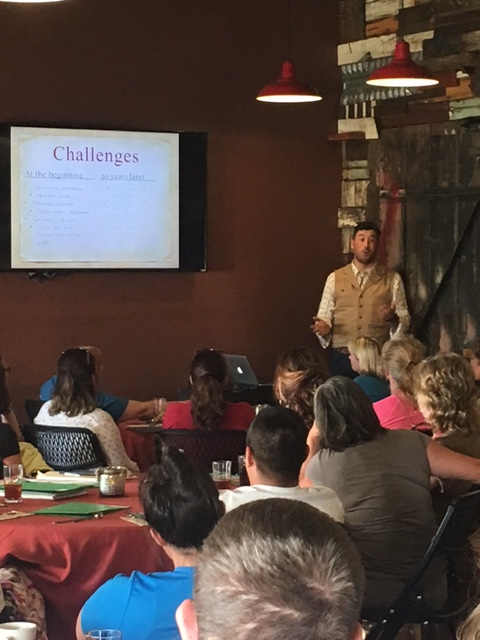
Jeremy Krones from the Diablo Trust explaining the non-profit organization created to promote social, biological, and economic sustainability in the ranching community.

Overall, the 2017 Summer Agriculture Institute allowed teachers to connect again, or for the first time, with the true source of their food, fiber, and fuel. Furthermore, the teachers gained skills on how to incorporate these concepts into their K-12 classrooms so that future generations even further removed from agriculture still understand the gate to plate journey and how everyone is touched by agriculture every day.
IMG_8824
Andy Groseta welcoming the teachers onto his ranch and explaining how ranchers, and those who live off the land, are true environmentalists.

“I’m finding a lot of new ways to incorporate what I’ve learned about agriculture into my 7th-grade science unit.”

“I had a meat science minor in college, and it’s great to be able to go back to feedlots and places I have been before.”

“I teach middle school math and have started an agriculture elective in the afternoon to try and start an FFA program early on. It’s the nature of Duncan [Arizona], and I want to go back to that.”

These are just a few of the endless quotes from excited, and, at the end of the week, very tired teachers who enjoyed this year’s agriculture institute, and we are thankful to be involved another year helping ensure the connection between the agriculture community in the field to those in grocery stores and around the table.

IMG_8821
Two Angus cross cattle on the W Dart Ranch.


Blog Post by Nicole Van Eerd, Arizona Beef Council 2017 Summer Intern.
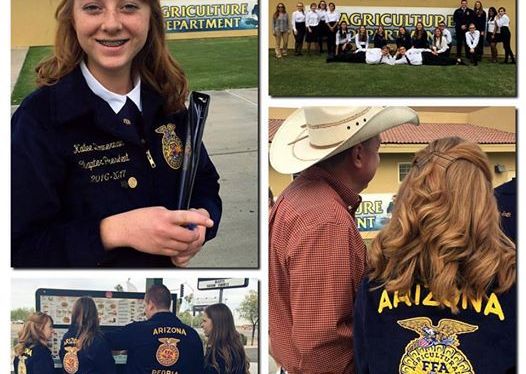
Meet an Arizona FFA Member: Kailee Zimmerman

17951993_10209201168682692_6340779997077207387_n
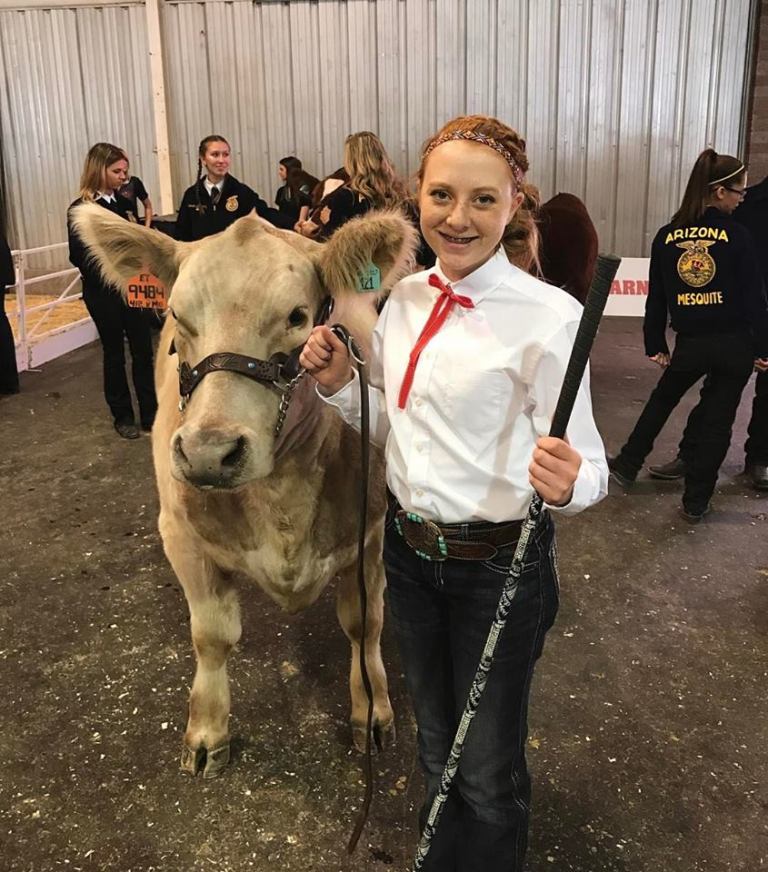
Kailee and her steer at the 2017 Maricopa County Fair auction.

Having the opportunity to serve as the Arizona Junior Beef Ambassador has been an absolute thrill and privilege!  I really do heart beef!!  My family ranched in southern Arizona in a small settlement called Klondyke when Arizona was still a territory. This is in the Aravaipa Canyon near the Graham Mountains, which is about an hour outside of Safford.  My great grandpa Neuel Weathersby started the family tradition of raising polled Herefords.  Though my grandparents sold the 7K Bar Ranch, they moved north and ran cattle on other ranches throughout the state.  I am so thankful to have been raised understanding the legacy of these amazing cattlemen as well as the example of my parents who are so very passionate about American agriculture.  It is from them that I get my love for Herefords and passion for the beef industry as a whole.  I have enjoyed carrying on their legacy by raising cattle of my own and being a member of the Arizona Cowpunchers Reunion Rodeo Association.  I recently bred my first heifer this year, and I am so excited to start my own herd with her offspring as well as my younger cattle.

17522815_10209183800568500_2817269657865241614_n
Kailee and family with her Reserve Supreme Champion Female at the 2017 Maricopa County Fair.

My family has been heavily involved in FFA for years. My dad, aunt, and uncle have served as state officers. My dad also was an ag teacher when I was little, and my friends and family members have grown because of the amazing leadership skills acquired through being an FFA member.  I wanted to have this opportunity so badly! However, I have attended a small charter school, that I love, since fifth grade, but it did not have an FFA program.  Thanks to my incredible parents and headmaster, we were able to get a chapter chartered! Being a member of Trivium FFA has been such an incredible blessing, not only for me but also for those in my chapter.  Many people today are so far removed from where their food comes from and, even more so, from the incredible people who raise and grow it.  Being a member of FFA has been yet another venue for me to share truths about the industry and community that I am so passionate about and proud to be a part of.  I know that the skills and experiences I gain through the FFA are invaluable – from public speaking to budgeting, and from leadership skills to learning how to work as a team.  I know that I will often turn back to these skills throughout my life to help me, and I will look back fondly at all the memories made with members of my chapter and the Arizona FFA Association.

15095603_10207928102376830_346046602982767038_n
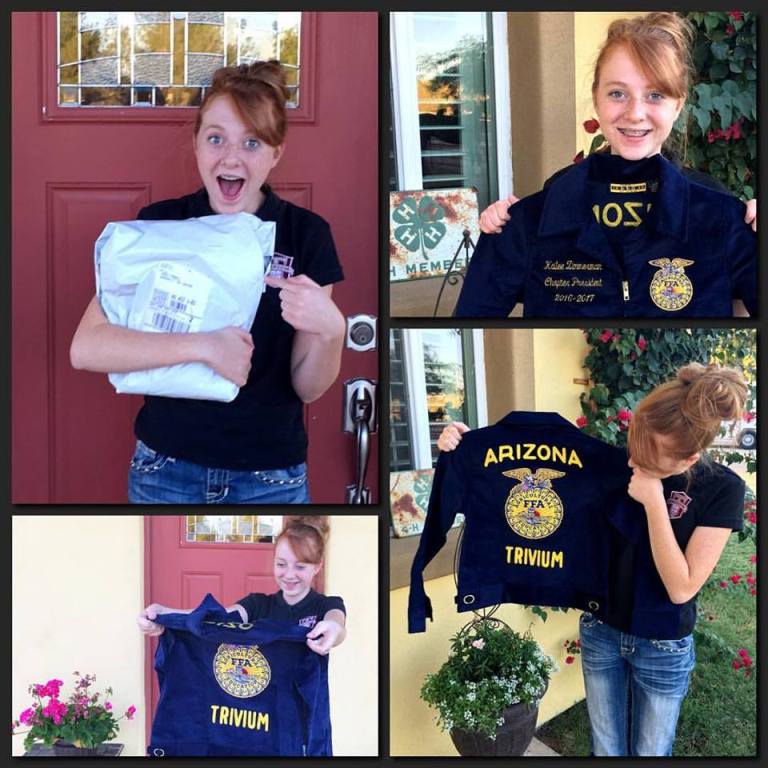
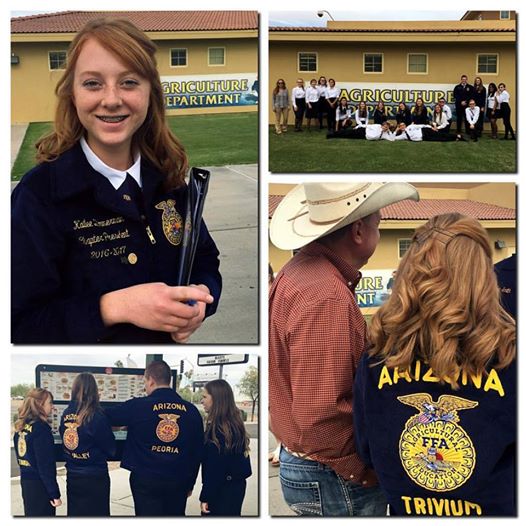
The blue jacket! FFA is known for the blue corduroy jacket members are required to wear at official events.

I am elated to be able to attend my very first State Leadership Conference as an FFA member this week.  Though I have had the privilege of attending a few sessions before, the feeling of sitting amongst the “sea of blue jackets” is indescribable.  It has been incredible to be a part of something so much bigger than myself.  At the opening session of the conference, Trivium FFA will be recognized as a newly chartered chapter, and it will symbolize the culmination of hard work and perseverance of so many people.  How grateful I am for them.  Because of their efforts, the members of Trivium FFA, as well as myself, can have a wealth of true knowledge and countless opportunities to learn and grow.

15442289_10208142706141790_2071959466316720964_n
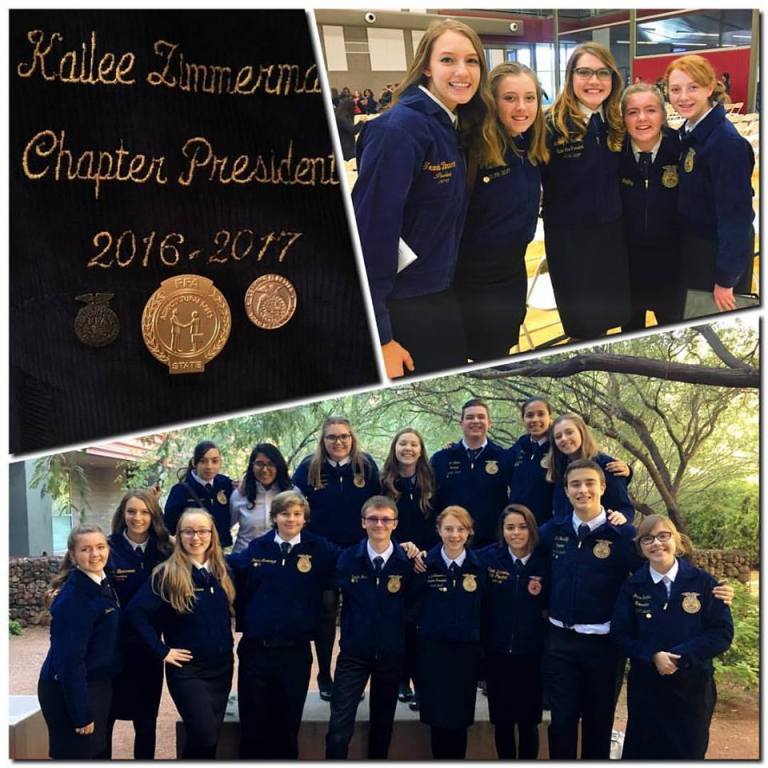
Trivium FFA at their first Midwinter State Conference. The group participated in Ag Sales, Food Science, Wildlife, and Floriculture contests with Kailee placing in the top ten individuals for Ag Sales and the entire Ag Sales team placing fourth.

Happy State Leadership Conference week to all!  I hope it is filled with tons of laughs and memories made!  May your herds be healthy and let’s all pray for rain!

Kailee Zimmerman
Arizona Jr. Beef Ambassador

15095102_10207940633050089_8484801700846087559_n
Founding members of the Trivium FFA Chapter attending their first Career Developement Event.

Memorial Day Round Up

The biggest weekend for grilling is here and we want to make sure you are prepared to impress your friends and family! We’ve compiled resources for you which include recipes, grilling tips, and more. Basically, just lots of reasons to fire up the grill this weekend and cook a delicious beefy meal!

beefhero-1495666243989-null-HRThe Beef Checkoff Releases its Most Coveted Recipies and New DIY Burger Bar Video to Make Summer Grilling and Entertaining Even Tastier
If you’re making burgers you’ll want to make sure and check out this link. A video, lots of ideas, and delicious results guaranteed.

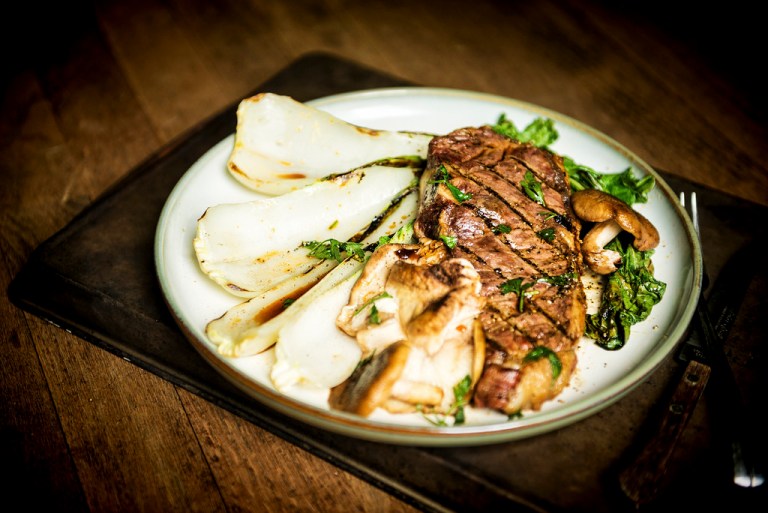
34033354683_682b71d3d8_bTumeric Rubbed Reverse Seared New York Strip with Bok Choy

Girl Carnivore knows her beef. If you want an amazing eating experience, you’ll want to check her out.

8-19-2016_marinades_9The 100 Best Burgers in America, Ranked by Our National Burger Critic
So not everyone wants to cook out this weekend and that’s okay! This link will give you the best 100 burgers to try out around the country. Here’s an idea. Make this list into a road trip! Find the best burgers closest to you, grab your best pal and hit the road.

cowboy-ribeye-herbs3 Reasons to Grill Steak This Weekend
Do you really need more reasons? Well, if you do check out this gal. Flavor, health, and budget all sound like good reasons to us.

Gate to Plate with the Arizona Culinary Institute

Arizona Culinary Institute students from the classes of Basic Culinary Skills, Meat Fabrication, and Baking filtered into a classroom of a different kind on an unseasonably chilly morning in May, ready for a tour of Arizona beef, from gate to plate. The room rang of excitement, anticipation, and sleepiness, as we did get started at 7:30 am. The real diversity and personalities of the classes began to emerge with introductions. The students were asked to tell us their name and their first memory of cooking. The future chef’s answers ranged from cookies to tamales, but there was a common theme: cooking with family. Lauren Scheller, Arizona Beef Council assistant executive director, made a connection with the group by saying, “Just like you all are passionate about cooking and feeding people delicious food, so also are Arizona ranchers passionate about raising quality and delicious beef for you to cook and serve to your restaurant guests.”

IMG_8619.JPG
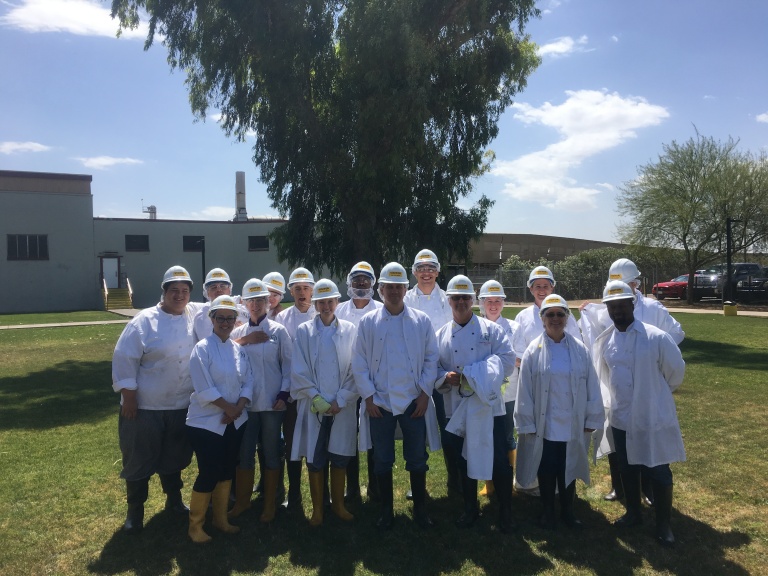
Students all geared up for the JBS tour.

JBS, USA in Tolleson, Arizona was the first stop on the agenda. JBS continues to be a reliable partner in educating influencers on how beef is processed and this year was no different. Bill Munns, director of marketing & product management, graciously set up the tour and James Stell, operations manager, hosted an excellent tour of the large plant. Honestly, the results of this year’s tour weren’t much different from past year’s, which was also positive. The students went home with an understating that quality animal care is a priority all the way through the lifecycle of a beef animal and continues until that animal is harvested. The Ah-Ha moments are always fun to hear as most often people are amazed at the lack of “gross” they had envisioned and how the entire process is kept clean and safe.

A delicious steak lunch by Bruce Brown Catering at the Buckeye Elks Lodge with a brief overview of the beef lifecycle followed the plant tour. The morning’s excitement had not yet dissipated, and the room only grew quite when the New York strip carving station was assembled. The anticipation was palatable. A brief presentation by the Arizona Beef Council’s Lauren Scheller and Tiffany Selchow covered the beef lifecycle with tips on decoding the many labels on beef packages and the nutrition beef offers us.

This slideshow requires JavaScript.

The beautiful outdoors greeted us as we stepped off the bus at Heiden Land and Cattle for a tour of the Heiden family’s feed yard. The seventy-six-degree weather made for a perfect backdrop as the students walked to the feed mill which steams and flakes corn, the bins of different grains and hay while learning how all these ingredients were mixed to provide the cattle a complete and balanced diet. Paul Heiden guided the tour to the cattle pens for more learnings the daily cattle care. This was followed by a detailed look at the working facilities which are used to tag, treat, and care for animals when they are first entering the feed yard or if an illness arises, which isn’t too common. Paul shared, “The care of our animals and the land we use is our top priority, and we are always excited to show off our feed yard to future chefs!”

IMG_4734.JPG
Arizona Culinary Institute students with the cattle of Heiden Land and Cattle.

Last chance for photos with the steers was given and then it was back on the bus to leave rural Buckeye and head back to the center of the 6th largest city in the United States. These culinary students left the Arizona Beef Council Gate to Plate tour armed with first-hand information straight from the feed yard owner and packing plant manager’s mouths. Honestly, we don’t think there is a better kind.

ABC board chairman Wes Kerr emphasized, “The Arizona Beef Council places immense value on the relationships the Gate to Plate Tours provide to cooking and nutrition influencers, such as the students at the Arizona Culinary Institute. We need to continue to be their first reference when faced with questions about how beef is raised or how it fits on a menu.” This tour is made possible by the Federation Initiative Fund, supported by beef councils in states where there are more cattle than people, and the Arizona Beef Council.


Meet Your Rancher: Anna Aja

IMG_5927 (002)

Arizona Beef Council: Where you are located? I live in Stanfield (in between Casa Grande and Maricopa) but my husband and I partner on a desert ranch south of Buckeye and I sell beef from my parent’s ranch in the Verde Valley.

What segment of the beef community are you involved in? Cow-calf/meat sales/mom/association staff.

Tell us a little bit about yourself, your family and about your ranch.
Anna Aja: I grew up the 4th generation on my family’s ranch in Cottonwood. I truly believe it was the best way to grow up. I am thankful for the independence it instilled in me and for the responsibility I was given in raising and caring for livestock. I was active in 4-H and FFA and served as the State FFA President my freshman year of college. I attended the University of Arizona and received a Bachelor of Science in Agriculture Economics. My husband and I actually met when we were 15 at an Arizona Cattle Growers’ Association convention but we re-met our freshman year and have been together ever since. We now have three kiddos, Basilio (5), Andy Marie (3) and Perry Craig (1). A year ago, I started selling beef directly to the consumer from our family’s ranches. I’ve always wanted to do it and since I’m located near such a large metro area I thought I would give it a shot. Our beef company is called 9F Cattle Co. 9F is the brand my husband’s grandmother gifted us after we got married and is what we use to identify our cattle. It was her father’s and she told us that the 9F stood for the 9 fruits of the Holy Spirit – “But the fruit of the Spirit is love, joy, peace, forbearance, kindness, goodness, faithfulness, gentleness and self-control.” –Galatians 5:22-23

IMG_6580
A throwback photo of Anna with sister Katy on the family ranch.

How does the technology you use now differ from the technology that was passed down to you or that generations passed may have used on this ranch?
In regards to my direct sales, with today’s technology world, launching my beef sales business was completely different from when my grandpa and his dad would wagon their meat and produce from Middle Verde up to the mining town of Jerome. First I got my website set up and decided to utilize an order form that took customer information but I would take payment upon delivery. Once that was complete I started my Facebook page and began to utilize word of mouth referrals and purchase advertising on social media that hit my desired target audience. I still do plenty of handshake deals which is gratifying to be able to work with people who are true to their word.

What are some common misconceptions that you think people may have about the beef you raise and sell?
When I sell beef to a consumer I really enjoy that personal connection. And I’m thrilled when they have questions about our ranch or cattle. I do find my customers are often surprised that the majority of our cattle don’t get sold directly but in fact go through the conventional method and end up in a Fry’s or Safeway somewhere. I always see a light bulb go off when they realize that the beef that is found in their local market was raised with care and respect by a family just like mine. I do take pride in the beef we sell and do consider it to be premium as it is dry-aged 21 days, custom cut for my customers and delivered to their doorstep.

IMG_5931 (002)
Bassie, the oldest of Anna’s children, loves helping on the ranch.


What is the most important thing that you want people to know about beef?
I’m often faced with someone who is nervous to purchase a lot of beef because they mention an inaccurate health claim. I want people to know that beef is part of a heart-healthy diet, that you can eat well and enjoy what you’re eating.

What is the most important piece of information that you want people to know about you and your family’s beef?
We take a tremendous amount of pride in doing a job well. We care about our animals’ quality of life and respect them for the protein they provide us. We care about the environment and being sustainable – we want to pass on our ranches to future generations. And finally, that the beef we raise and sell to them and their family is the same beef we feed our family.

If you could describe in one word the life of a rancher, what would it be?
Cyclical.

IMG_3603
A delicious meal always includes beef!


Lastly and of course most importantly, what is your favorite cut of beef and how do you like to prepare it?
I’m a ribeye girl through and through and I want it grilled over charcoal or mesquite by my husband. But really, I love brisket, tri-tip, flat iron, short ribs and more. One of my all-time favorite recipes is this one by Anne Burrell – I’m actually making these on Sunday!

Arizona Team Beef: Cami Cheatham Schlappy

Arizona Team Beef member Cami Schlappy is a mom, rancher, equestrienne, and fifth generation Arizonan. Meet Cami:

4-28-2017_Arizona Team Beef_Cami Schlappy_3

Arizona Beef: What are your favorite ways to live a healthy, active lifestyle?

Cami: Having a toddler at home means I rarely sit down. My daughter, Celine, and I are always on the move. We are outside a lot to explore nature, spend time with our animals, and enjoy the country life.

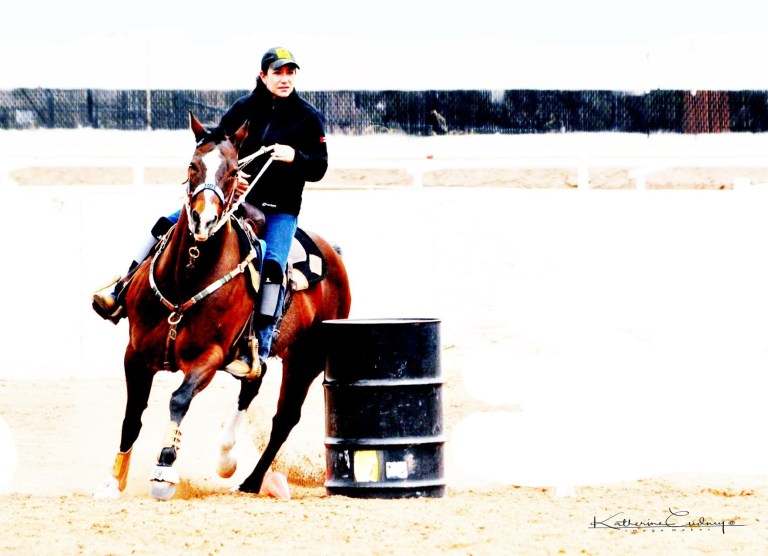
My way of exercising is riding my horses. Keeping them in shape requires riding them at a walk, trot, and lope to keep their muscles toned. In doing so, I’m toning my muscles and building my endurance and fitness level. This is really great for my core and postural muscles and it really works out my legs. I’ve gone back to team roping with my dad, Foster Cheatham. This month I started back barrel racing. I enjoy competing and it helps motivate me to continue my fitness journey. If I’m in better condition, I can ride at a higher level and my horses will perform better. More importantly, if I’m healthier, I can spend more quality time with my family and be a better example for my daughter.

4-28-2017_Arizona Team Beef_Cami Schlappy_1

How does beef help fuel your active lifestyle?

Lean cuts of beef, using marinades, slow cooking methods like crockpots, and soups have really helped me shed excess weight. I can still eat the beef I enjoy while loading up on vegetables by eating meals like beef and broccoli, fajitas, albondigas (meatball and veggie soup), loaded beef stew, and steak strips over salad. The beef gives me energy and the essential nutrients, including protein, I need to build muscles.

Did Team Beef inspire you to get active/healthy again?

Thanks to Arizona Team Beef and Million Mile Month a year ago April, I lost all my pregnancy weight and then some. I’m down six pant sizes and have more energy than before. The April 2016 Million Mile Month and Team Beef motivated me to get moving and to log my exercise. That led me to buy a FitBit and continuing to exercise after the Million Mile Month promotion was over. I started riding my horses more and returned to team roping and barrel racing. I now try and ride at least five days a week and be active every day. My goal is to increase my muscle and physical fitness level and continue to shed excess weight. I use portion control and lean meats to maintain my diet.

4-28-2017_Arizona Team Beef_Cami Schlappy_4

4-28-2017_Arizona Team Beef_Cami Schlappy_5
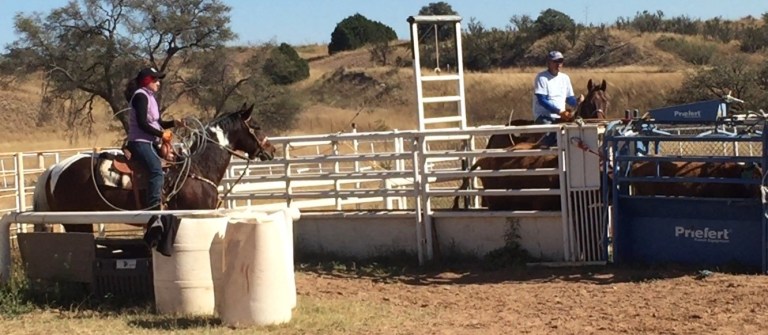
Team roping, a sport included in rodeo, is fashioned after a real-life practice on ranches. For example – sometimes you need to catch cattle to provide doctoring to an animal when corrals are not near.

What is your tie to the Arizona beef community?

My maiden name is Cheatham and my family helped settle the Phoenix area beginning in 1919. We had a five-generation dairy on 51st Avenue and Baseline in Laveen. We milked a registered herd of Holstein cows and grew alfalfa, cotton, and some produce. My family has always been active in the agricultural community: United Dairymen of Arizona, Salt River Project4-H, Arizona State Cowbelles, Project CENTRL, Arizona National Livestock Show, Arizona State Fair, and Maricopa County Fair, to name a few.

I attended the University of Arizona majoring in Animal Science. My Master’s degree focused on the effect of anabolic implants on the live performance, carcass characteristics, and gene expression in long-fed Holstein steers.

Currently, I reside in Santa Cruz county and am active in my local and state Cowbelle organizations. I help in outreach and educational events such as the yearly Ranch and Rodeo Day at our local elementary school, serving steaks to returning troops stationed at Fort Huachuca, getting beef and ranching information out to schools, and volunteering at local events. I enjoy educating the public about the values and benefits of ranching and beef.

My favorite beef meal or cut of beef?

Prime Rib! Prime Rib has been a lifelong favorite. I make it for holidays and special occasions. Other beef favorites? There are so many! A few of my other favorites are grilled rib steaks, my dad’s beef tacos, albondigas (Mexican meatball soup), biscuits and gravy, and slow cooked ribs.

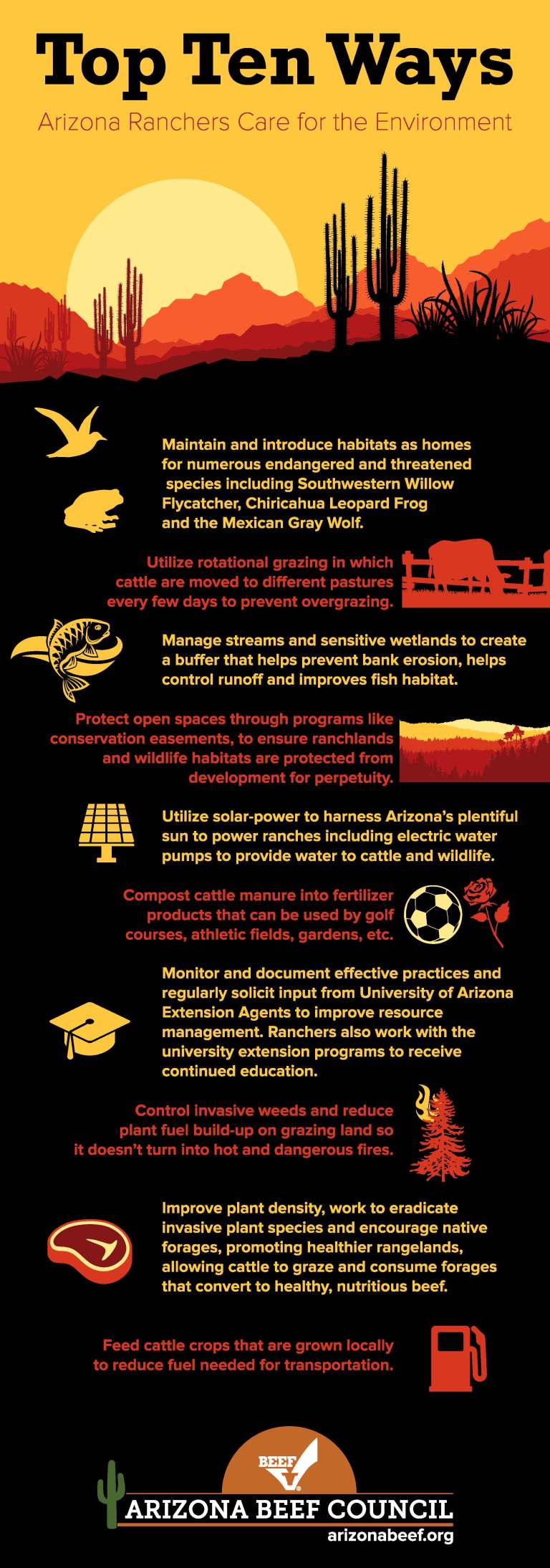
28 Ways Arizona Ranchers Care for the Environment

Earth Day is an everyday thought for Arizona’s beef farmers and ranchers. This lists only includes 28 ways Arizona ranchers care for the environment, but we promise there are many other ways. Caring for the land, their cattle, and you, the consumer, are the most important priorities for Arizona cattlemen and women.

  1. Maintain and introduce habitats as homes for numerous endangered and threatened species including Southwestern Willow Flycatcher, Chiricahua Leopard Frog, and the Mexican Gray Wolf.
  2. Utilize rotational grazing in which cattle are moved to different pastures every few days to prevent overgrazing. 
  3. Maintain proper nutrients in soil by regularly analyzing soil samples. This also helps to determine if nutritional supplements are needed to help meet cattle’s nutritional needs.
  4. Implement conservation tillage so that soil can be conserved and available moisture used more efficiently.

    11.17.09 150 (002)
    Photo from the Menges Ranch.
  5. Manage streams and sensitive wetlands to create a buffer that helps prevent bank erosion, helps control runoff and improves fish habitat.
  6. Utilize beef production practices and tools to raise more beef with fewer natural resources.
  7. Arizona mines use cattle to slow water runoff on tailings slopes by feeding oat hay and allowing cattle to graze down the slope while depositing organic matter and encouraging trails which help to reduce quick moving water.
  8. Utilize biofuel on cattle operations. The grain by-product of ethanol production, distillers grains, are fed to cattle as a nutritious source of energy.
  9. Fertilize fields with manure from cattle feeding operations to reduce fuel needed to manufacturer synthetic fertilizer.

    IMG_1320
    Photo from Pinal Feeding.
  10. Protect open spaces through programs like conservation easements, to ensure ranchlands and wildlife habitats are protected from development for perpetuity.
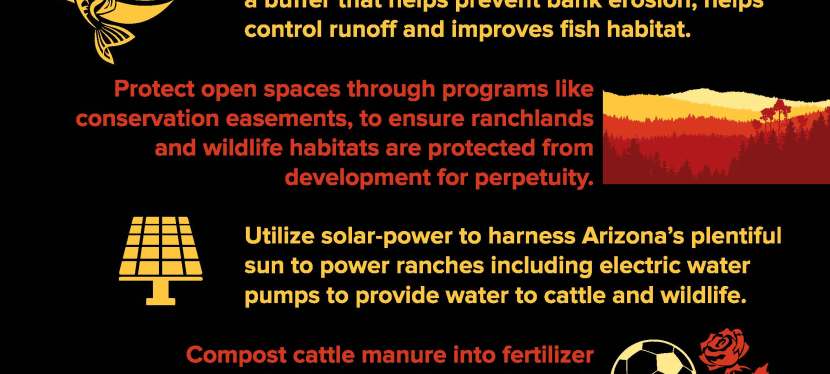
  11. Utilize solar power to harness Arizona’s plentiful sun to power ranches including electric water pumps to provide water for cattle and wildlife.

    KONICA MINOLTA DIGITAL CAMERA
    Photo from OX Ranch.
  12. Create retention ponds to protect waterways from excessive runoff and to contain rain water for cattle and wildlife to drink.
  13. Provide habitat for ground nesting birds including the Bobwhite and Gambel’s Quail. 
  14. Operate methane digesters, which capture methane from manure decomposition and utilize it to generate electricity for the farm.
  15. Participate in university research projects that aim to improve agricultural environmental practices.
  16. Compost cattle manure into fertilizer products that can be used by golf courses, athletic fields, gardens, etc.

    22
    Photo from OX Ranch.
  17. Practice Coordinated Resource Management (CRM) in partnership with the Natural Resource Conservation Service (NRCS) to improve grasslands, soil, and wildlife habitat.
  18. Plan soil nutrient management systems to control nutrient runoff and to minimize the need for additional nutrients to grow crops.
  19. Monitor and document effective practices and regularly solicit input from University of Arizona Extension Agents to improve resource management. Ranchers also work with the university extension programs to receive a continued education.

    IMG_2824
    Photo from ZZ Cattle Co.
  20. Control invasive weeds and reduce plant fuel build-up on grazing land so it doesn’t turn into hot and dangerous fires.
  21. Install irrigation systems that efficiently utilize limited water resources.
  22. Facilitate fish passage at irrigation diversions so migrating fish can continue to spawn in creeks.
  23. Install fish screens in ditches so that fish do not get trapped.
  24. Partner with state, local and national environmental agencies to monitor land, water, and wildlife, and make improvements.

    img_8166
    Photo from Garcia Ranches.
  25. Hold up water on ranchlands for extended periods of time in order to replenish underground aquifers and filter out nutrients and particulate matter.
  26. Improve plant density, work to eradicate invasive plant species and encourage native forages, promoting healthier rangelands, allowing cattle to graze and consume forages that convert to healthy, nutritious beef.
  27. Feed cattle crops that are grown locally to reduce fuel needed for transportation.
  28. Use windmills to harvest wind energy into usable mechanical power.

This is a short list compared to what is done on ranches to ensure the land is cared for properly. Work is also done to recognize others in the beef community who have made long-standing contributions to the preservation of the country’s natural resources through the Environmental Stewardship Award.AZ Top 10

Meet Your Rancher: Jim and Jeanne O’Haco

Jim O'Haco_Kathy McCraine.jpg

Photo by Kathy McCraine of Jim O’Haco

Ranchers: Jim and Jeanne O’Haco.

Arizona Beef Council: Where you are located?
Jim O’Haco: Our ranch is located 30 miles south of Winslow, Arizona sitting at an elevation of 6,200 – 7,000 feet. We raise mostly Black Angus cattle along with black baldy (Hereford/ Angus cross) cows who are bred each year to raise a calf. We sell first-calf heifers and bulls, along with calves in the spring and fall.

Tell us a little bit about yourself, your family and about your ranch.
Our story begins in 1898 when my grandfather Michel O’Haco came to this country from the Basque Pyrenees in Europe. He immigrated at the age of 14, landing at Ellis Island in New York and made his way cross-country to Phoenix. He had an uncle who was a sheep man around Wickenburg, who promised him work upon his arrival. He saved his money while working as a herder and eventually bought his own sheep, and thus the O’Haco Sheep Company was started.

For many years, he acquired land and continued to increase his sheep numbers and ranches. In 1946, he was the largest sheep man in Arizona, with properties all over the state, including summer ranges in the northern plateau and winter pastures in the Salt River Valley around Phoenix, Arizona.

My grandfather had 4 children, but only one son, MJ O’Haco, (my father). MJ was attending the University of Arizona when World War II broke out. He was assigned to the last cavalry unit but ended up in the infantry when the horses sank at sea; he served with honors as a Captain. At Nuremburg, Germany, MJ was shot twice in the back by a sniper while saving the life of a commanding officer, which left him paralyzed and unable to walk. At this point, my grandfather began dissolving his holdings, as he figured his only son would never be able to ranch. He kept his best properties, the Chevelon Butte Ranch and the Divide Ranch in Wickenburg.

After five long years, my father regained his health and married his Army nurse (my mother) in 1946, eventually having 8 children. My father returned to Chevelon Butte, and slowly began the transition from sheep to cattle. MJ continued to ranch until his death in 2001.

Fast forward and here is a short history about myself. I was born and raised in Winslow, attended the University of Arizona earning a degree in Animal Science and a minor in Range. I was accepted into veterinary school, but returned home and started running the daily operations of the ranches, which at one time consisted of four ranches and a small farm. My entire life has been devoted to the outdoors and agriculture.

20940001
Pictured: Jeanne and Jim O’Haco, Senator Jeff Flake, and Mike O’Haco

As we’ve learned from our past blog posts, conservation and proper land management are important topics. When did you start conservation projects? What is an example of a conservation project?

Range conservation projects have been a part of our outfit for as far back as I can remember. My father switched from sheep to cattle in entirety in 1948 -1950. He fenced the perimeter, then cross fence pastures, as well as built earthen tanks to provide water to the livestock.

In 1995-1997, the ranch started discussions with the Arizona Game & Fish Department (AGFD), the United States Forest Service (USFS), the Arizona State Land Department (ASLD), and the Natural Resource Conservation Service on a water project we now call High Point. A severe drought had been in existence for several years, and the concept of developing a well that could gravity flow water lines to several different pastures and open country that had no water was the vision and goal. Management agreements with the AGFD, ASLD and USFS were finalized, and the project began in 1998 when a well was drilled that would supply 40 gallons a minute from the depth of 1,350 feet, operated off a 35KW generator with a submersible pump.

A 100,000-gallon storage tank was erected on a state section, on the highest point on the ranch, and connected plastic pipelines. As time and money permitted, more lines were trenched over the following ten years, with drinker troughs strategically placed in pastures that needed additional water. To date, with gravity flow, approximately 35 drinkers (steel troughs holding between 750-1000 gallons of water), and 42 miles of buried pipeline, supply water to 60,000 acres. The last trough is 25-30 miles from the storage tank, all watered by gravity flow.

By providing more water throughout the ranch, it has improved range conditions with the distribution of animals ensuring they are not walking to the same water daily and killing vegetation. The water is cleaner, as it comes out of a storage tank, then to the water drinkers. The average rainfall in the area is between 12-18 inches per year, with an average being 16 inches. All earthen tanks are still cleaned regularly and maintained for rain water and run off. We have not had to haul water since 1998.

JFO water tower
Jim, pictured at the water tank. Photo by Arable Media.


How do these water improvement projects effect the wildlife on your ranch?
Water is provided year-round for all animals and critters. After our cattle are removed, the lines are not shut off. AGFD helps maintain High Point Well while we provide the daily operation of starting and maintaining the lines and AGFD helps with the fuel expense and replacement of generators when needed._MG_6935What restoration projects have you done on the ranch?
Grassland habitat restoration has taken place across 15,000 acres through mechanical mastication of invasive juniper and other brush to enhance grass growth and restore habitat restoration by at least 30%.

Supported by the Partners for Fish and Wildlife Program, Sevilleta National Wildlife Refuge, Natural Resources Conservation Service, Arizona Game and Fish Department, Apache- Sitgreaves National Forest Black Mesa District, Rocky Mountain Elk Foundation, Arizona Elk Society, Arizona Antelope Foundation, and Winslow Elk Habitat Partnership Committee, we’ve restored, enhanced and/or improved livestock management practices on more than 20,000 acres of private, state, and federal lands.

JFO Ranch
Photo of the ranch by Arable Media.


What is the most important piece of information that you would want people to know about you and the work you do on you ranch every day?
One is being able to produce good, quality livestock. The other is to improve the habitat I have been blessed with, leaving it better for the next generation.

If you could describe in one word the life of a rancher, what would it be?
Hard work.

The most important question! What is your favorite cut of beef and how do you like it prepared?
A juicy cheeseburger, well done, with all the fixings is the best!!


Meet Your Rancher: The Murphys


AGR_0031 (1)

Ranchers: John and Joan Murphy of the OX Ranch

Ranch Location: 15 miles northwest of Congress, Arizona off the Date Creek Road.

Arizona Beef: Tell us about your ranch.
The Murphys: The OX Ranch is a desert ranch consisting of 65,000 acres of private, BLM, and Arizona State Trust land located 80 miles northwest of Phoenix, Arizona. The ranch also leases a 30,000-acre summer grazing allotment in the Coconino National Forest south of Flagstaff, Arizona. We are a cow/calf ranch with 650 Black Angus, Hereford, and Brahma-cross cows, using Angus bulls of a diverse genetic base. Operating in harsh desert conditions, our goal is to produce a smaller-framed animal needing less forage to sustain itself, the ability to thrive in high temperatures, calve unassisted on the open range, and the genetic potential to grade choice or prime at the harvesting facility.

Animal health is a primary focus. The ranch has been an active participant in the Beef Quality Assurance Program for many years and is registered with Premise ID, and the National Animal Identification System.

What have you done to improve the ranch?
The OX Ranch has an enormous amount of history and through work with various partnerships (i.e. Natural Resources Conservation Service, Arizona Game and Fish Department, U.S. Fish and Wildlife Service – Partners for Fish and Wildlife Program, U.S. Forest Service, Arizona State Land Department, University of Arizona and UA Extension Service, and the Prescott Audubon Society) we have been able to take a run-down and abused ranch in the desert and return it to a healthy state, both economically and environmentally. A few completed projects include the eradication of invasive species in two riparian areas, the fencing of three riparian areas to allow controlled grazing, the placement of solar pumps on desert wells to assure reliable water for cattle and wildlife, and much more.

KONICA MINOLTA DIGITAL CAMERA

What are some common misconceptions that you think people may have about the way your raise your beef on your ranch?
It is our belief that few individuals in the state realize how many ranchers work to improve the health and productivity of the land they’re managing.

22.jpg

How does wildlife benefit from the improvements made to the ranch?
We enjoy the many varieties of wildlife and love seeing our winter flock of Canada geese fly overhead several times daily. The geese, as well as our deer herd, are seen in the alfalfa fields regularly. Both lakes attract waterfowl year around, and a pair of blue heron have taken up residence. All the watering facilities on the ranch have access for wildlife in compliance with NRCS specifications designed to protect all kinds of desert dwellers. All new cross-fencing is wildlife friendly with smooth lower wires. Quail nesting habitat was created by piling up vegetation removed from the fields, offering protection from predators. An island was constructed in the lake to promote safety for ground nesting waterfowl.

Many trees have been planted for birds, and provide a continuous route from the lake, along the fields, and on down through the riparian area. As recommended by the U.S Fish & Wildlife Service, this assures connectivity of habitat – an important aspect for birds. Audubon Arizona, in their state publication, recently identified 5 Arizona birds whose numbers have declined from 63%-93% due to loss of habitat and development. Maintaining ranch lands was cited as an important way to counteract this trend.

8 (1)

What practices on the ranch have made a difference in how you raise cattle?
Many practices have affected our ranching business, with the sustainability of the land always key to those efforts. Just the investment in numerous water facilities, including 20 solar well pumps, 9 well pumps on grid power, 57 stock ponds, 26 water storage tanks, 138 drinkers made from metal or concrete along with 150 miles of fencing, 150 miles of dirt roads, and 43 miles of water pipeline, has enabled the use of thousands of additional acres of grazing land by cattle and wildlife, allowing for a more consistent annual impact. We have been able to increase our herd size, and have modified our grazing methods and rotation of pastures to improve forage health. By employing the most stringent health practices available and having the willingness to scrutinize and invest in herd bulls that are both geographically suited to our area, and have the best genetic makeup for our specific needs, we have made significant improvements in herd and carcass quality. All these steps have translated into higher production and greater profitability in the product we market.

OLYMPUS DIGITAL CAMERA

What is the most important piece of information that you would want people to know about you and the work you do on you ranch every day?
We have a passion for caring about the land and caring for the land – that is what ranchers have done historically and continue to do.

If you could describe in one word the life of a rancher, what would it be?
John – Hard work
Joan – Commitment

Meet Your Rancher: Dan Bell

We’d like to introduce you to Dan Bell, 48, of Nogales, ArizonaIMG_2828.

Arizona Beef: Tell us a little bit about yourself, your family and about your ranch:

Dan Bell: I am a third-generation rancher with a degree in Renewable Natural Resources from the University of Arizona. I am married to my wife of 23 years, Roxanne. Roxanne is a middle school science teacher and is also the advisor to the Arizona Junior Livestock Association. We have three children – Aidan is 9 years old and in the 3rd grade, Matt is 17 years old and a junior at Nogales High School, and Katie is 20 years old and a sophomore at Pima Community College and transferring to the University of Arizona College of Agriculture in the fall. Our ranch is a family held corporation called ZZ Cattle Corporation. It is comprised of 9 family shareholders, my parents, George and Juby, my uncle and aunt, Tom and Charlotte, my three cousins, Scott, Thomas and Chris, as well as my sister Jessica and me. Management of the ranch is handled by my cousin Scott and me, with input from my father and uncle.

3-31-2017_Dan and Roxie
Dan and Roxanne with Wilbur and Wilma.

The ranch got its start in the mid 1930’s when my grandparents Thomas and June Bell acquired the 61 Ranch which was largely made up of a Forest Service grazing allotment. Over the years, the ranch operation has grown to Forest Service grazing, a State grazing lease, private land and private leases. In the beginning, the cattle herd was Hereford and in the 1980’s we began the transition to the Black Angus herd it is today.

We pay careful attention to our genetics, to enable our livestock to perform in our country, while at the same time providing the consumer with what they desire. We raise our own replacement heifers to put back in the cow herd and purchase high quality purebred Angus Bulls to achieve our desired outcomes. We are Beef Quality Assurance certified and do our best to constantly move forward, improving our cattle and the ranch.

3-31-2017_Dan Bell
Photo credit: Tucson.com

We ranch along the border with Mexico for approximately 10 miles. The size of the ranch is approximately 35,000 acres, with a stocking rate of about 1 cow to 50 acres. We are home to many endangered species like Mexican Spotted Owl, Lessor Long Nosed Bat, Chiricahua Leopard Frog, Sonoran chub (a minnow) and we have even had Jaguar presence. It is also home to wildlife like Mule Deer, Whitetail Deer, Javelina, Coatimundi, Mountain Lions, Mearns Quail, and much, much more.

How does the technology you use now differ from the technology that was passed down to you or that generations passed may have used on this ranch?

The biggest change we’ve probably experienced with regards to technology would be our record keeping. Tagging animals with individual identification, along with the use of computers and spreadsheets has allowed for more information to be collected and stored and is easily reviewed and evaluated for the cattle we raise. Cattle handling equipment has also come a long way, as it provides safer environment for the both the rancher and livestock which enables us, as ranchers, to obtain data and perform Beef Quality Assurance practices.

What are some common misconceptions that you think people may have about the way you raise cattle on your ranch?IMG_2824

Sometimes it is alleged that ranching has a negative impact on the environment. However, I would submit that the opposite is true. Ranching and raising cattle have positive impacts everywhere you look. They provide open space over large landscapes, enabling wildlife connectivity. We take pride in what we do. We monitor vegetation on a yearly basis to ensure we are meeting resource expectations. Through our water developments, we are providing reliable sources of water not only for the livestock we raise but also because the wildlife has become dependent upon it. The strategic placement of our water facilities allows for more uniform distribution of livestock and wildlife over the entire ranch.
We also utilize rest-rotation grazing management that allows us to graze pastures in a pattern that allows for each of our pastures to receive growing season rest 2 out of every 3 years. As ranchers, we are most interested in assuring that resources we depend on year after year will continue to provide for generations to come. If we are successful in that endeavor, then we know the livestock and wildlife will thrive.

3-31-2017_Dan water

What is the most important thing that you do on your ranch every day to make sure you are raising safe beef for all to consume?

As ranchers, it is important for us to continually monitor our livestock to ensure the herd is healthy. In regards to our ranch, we are certified in Beef Quality Assurance programs that provide a frame work to follow and implement best management practices for livestock handling, vaccination protocols, and preconditioning our livestock to ensure sickness is not a factor.

3-31-2017_Dan cattle

What would you like people to know about you and the work you do to raise beef?

Our family takes pride in what we do. Through our livestock, we take a renewable natural resource and convert it, into a safe and wholesome product, beef! It is an awesome responsibility when you consider that only about 1 percent of the U.S. population is providing the nutritional requirements for the country and a lot of the world.

3-31-2017_cattle trailing

If you could describe in one word the life of a rancher, what would it be?

Rewarding!

3-31-2017_Matt Bell
Matt Bell gathering cattle at dawn.

Lastly, and of course most importantly, what is your favorite cut of beef and how do you like to prepare it?

This is extremely difficult to answer because there is a cut of beef for any occasion. For special occasions and holidays, a standing Rib Roast is on the plate. For gathering with friends, it has to be the Flank and Skirt Steaks prepared Carne Asada style. But, perhaps my favorite cut is the Ribeye.

ZZ Cattle May 2015_001