Teaching the Teacher

Every summer, the Arizona Beef Council along with agriculture groups and the University of Arizona plan and execute the Summer Agriculture Institute (SAI) program, a five-day tour designed to teach K-12 teachers about food and fiber production and help them incorporate that knowledge into their classroom curriculum. SAI combines hands-on learning about agriculture with practical curriculum development. In fact, today marks the final day for the 2016 program and although survey results aren’t in yet, we think it was another successful year.

Each year the program focuses on a certain part of the state with this year’s focus being central and northern Arizona with many stops scheduled to cover all aspects of Arizona agriculture. We are excited to note many stages in the beef lifecycle were covered this year, giving teachers a better understanding of how cattle are raised in Arizona.

13404030_10154283253759533_7028080447596370629_o
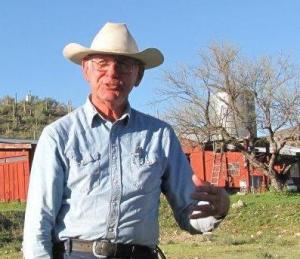
The picturesque setting of Groseta Ranches was amplified by Andy and Mary Beth Groseta’s passion for the land, their cattle, and the consumers who purchase their beef. Andy shared many amazing facts with the teachers such as Arizona ranchers raise enough beef to feed every person in our state. Arizona has a population of 6.8 million.

Groseta Ranches, a beautiful ranch in Cottonwood, Arizona working on its fifth generation of ranchers, was the first cattle stop of the week. The teachers heard from Andy Groseta about how the ranch works (For more info on cow-calf ranches, click here) and then covered the many issues they face. A delicious Fiesta Beef Salad lunch along with many yummy desserts was also provided by the Yavapai Cowbelles and Andy’s wife, Mary Beth.
IMG_6874
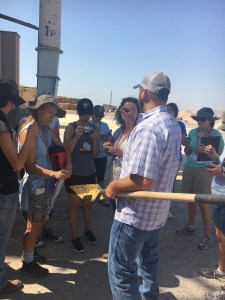
Paul Heiden took teachers around his family’s feedlot showing all aspects including the steam chest which flakes corn and other ingredients which are used in the mixture fed to his cattle.

The next stage in the beef lifecycle was demonstrated at Heiden Land and Cattle, a family farm which has been operated by the Heiden’s for 60 plus years, led by Paul Heiden. This is the stage after cattle have reached a certain weight and arrive at the feed yard to put on weight while maintaining their health. Many steps go into ensuring the safety and health of the cattle at the feed yard including the utilization of veterinarians to advise on proper health care along with a cattle nutritionist who studies the feed products available and determines which combination will be the healthiest for the animals. This stage of the beef cattle lifecycle is important to the marbling and quality of the beef at your grocery store.

The final stage of the lifecycle was shown at Perkinsville Meat Processing. This segment is where cattle are turned into beef. A slaughterhouse can cause some a sense of apprehension and anxiety. However, Lori Aquilone, a teacher on this year’s tour,  approached us today at the wrap-up lunch, stating she didn’t eat meat before this tour because of concerns including safety, cleanliness, and humane treatment. She was excited to announce her fears were put to rest and she now felt safe and comfortable consuming beef and other meat products after visiting and learning the process. If you are interested in seeing the actual process from start to finish, check out Temple Grandin’s Glass Walls Project. Please be warned, this video could be considered graphic to some.

This week-long journey is exhausting for both teachers and volunteers but one which is important in our society which is so far removed from the farm. Currently, the average citizen is 3 generations removed from any sort of agriculture work so it’s understandable how some might not understand how things work. The teachers who participate in this tour are able to see many aspects of agriculture, first-hand, and take that important information back to their students. We are grateful they take a week out of their schedule to spend time with us!


Why God Made a Rancher?

13336345_10208961407054307_1119172926_n
Meet Jolyn, the wisdom behind the insightful posts on Arizona Ranch Reflections.

This week, we are excited to reuse an insightful and wisdom-packed post from one of our personal favorite Facebook pages, Jolyn Smith at Arizona Ranch Reflections. If you don’t already follow this page, we highly recommend you start because she posts some of the most beautiful photos from southern Arizona and then adds incredible knowledge and insight. Learn more about Jolyn below and then enjoy her post!

Jolyn Smith is a fourth-generation Arizona rancher who along with her husband Shane have a cow-calf operation raising Brangus cattle in the Dragoon area. Ranching for her has been the best way to raise up a family, and she feels blessed beyond measure to have been able to teach her children how to be stewards of the land, to appreciate the beautiful things that God has created all around them, and how to be cattlemen. She is proud to be able to enlist the help of her “top hands” when needed and loves it, even more, when the 6.5 grandchildren tag along learning that when you do something you love, it doesn’t work.


Originally posted March 6th, Arizona Ranch Reflections

Found this little guy out in the pasture last week. He is extra tiny, I thought possibly a little premature or a twin judging by the hair on his hide. He was barely able to walk, and he was really weak and dehydrated. We brought him home and have been nursing him night and day.

We went out and found his mother the same day we found him, she wanted her baby but she is pretty tall, and he just couldn’t reach her bag, he’s seriously that tiny. I also confirmed my suspicions that he might be premature because the momma barely had a bag at all. I don’t think he was a twin. This momma has been a good cow and has had four healthy, perfectly normal calves before, so she’ll get another chance.

12801408_1888353174724331_5946609478494730846_n
Don’t you just love the look of “What do you mean it’s not normal for me to be in the kitchen wearing a shirt!?”

He has overcome his dehydration and his bowel issues, he is much stronger now, and he sorta chases me around the yard wanting more milk, he’s still very slow, but it seems like he might make it!

Of course, we have all loved him since we found him, problems and all. Two of my littlest Grandgirls are excited for him to go live with them, hopefully, this week. Poor guy, I can’t even imagine what his name will be! The littles went to the Zoo with their parents, and the older of the two got a giraffe stuffed animal and named it “monkey,” so it really is hard to say what his name will end up being!

It has been a challenge to help him overcome his weaknesses and the things he has struggled with in his short little life, had we not found him, he never would have lived out in the “wild.” Some would say it’s silly to spend the time and effort, but I guess that’s why God made a rancher. It’s just what we do.

I couldn’t help but think that this is how our Heavenly Father is with us. We each have weaknesses, problems, and bad habits. He’s not waiting to love us until after we have overcome these things, like us loving this little calf; He loves us right now, today, with a full understanding and knowledge of our struggles. He is here to help us along, day or night; we can’t survive out in this “wild” without Him.

And why yes, it’s all good that he sleeps in my kitchen at night wearing one of my shirts!

Have a blessed day and remember you are loved… just the way you are!

Take Pride in Your Work. Take Care in How You Do It.

We are excited to introduce to you our current Arizona Beef Ambassador and also a member of the National Beef Ambassador team, Mackenzie Kimbro. Her Roots Run Deep (also the perfect name for her blog) in the Sonoran desert and cattle ranching so take a moment to enjoy her blog post. Be sure to check out her personal page Cola Blanca Productions, LLC..


IMG_4461
Mackenzie Kimbro on the ranch.

I am proud to be the sixth generation in my family to be a cattle rancher. My grandpa, my mom and I ranch in scenic southeast Arizona, having one ranch in the Chiricahua Mountains and the other in the San Bernardino Valley along the US/Mexico border. Our landscape is incredibly diverse and is one that has been intensely and continuously sought after for scientific study; and therefore, it is no surprise that we are actively involved in conservation efforts.

cattle in borderlands from mbg website
Photo by the Malpai Borderlands Group

Beginning in 1991, my grandparents Warner and Wendy Glenn helped found the Malpai Borderlands Group, an organization who stood to bring progress by getting ranchers and environmental agencies to sit down at the table together. The MBG’s mission: “Our goal is to restore and maintain the natural processes that create and protect a healthy, unfragmented landscape to support a diverse, flourishing community of human, plant and animal life in our borderlands region. Together, we will accomplish this by working to encourage profitable ranching and other traditional livelihoods, which will sustain the open space nature of our land for generations to come.” This organization has made leaps and bounds in the environmental and ranching communities worldwide, and has served as a great meeting place for collaborations as a good amount of grazing lands leased by ranchers are owned by state and federal agencies (so, working partnerships with ranchers/permittees and these agencies are critical).

The MBG’s website goes on to say: “Perhaps the most remarkable feature of this huge landscape is that fewer than 100 human families reside on it. Many of the families who live here have been here for generations. Except for two small wildlife preserves, this is cattle ranching country. As ranchers, we have been concerned about a key resource we depend on for our livelihoods and way of life – the diminishing quality of grasslands for grazing. Fragmentation of the landscape, beginning with the subdivision of some ranches in our area, has also been a looming threat. We formed a nonprofit organization to bring ranchers, scientists, and key agencies together, and today the Malpai Borderlands Group now carries out a series of conservation programs and activities, including land restoration; endangered species habitat protection; cost-sharing range and ranch improvements; and land conservation projects.”

borderlands poppies from mbg website
Photo by the Malpai Boarderlands Group

Conservation is key to the continuity of the beef community and is an integral facet in the way we raise quality beef. Ranchers across the country are everyday environmentalists and we take great pride in knowing that we work constantly to provide America with safe, wholesome, nutritious beef in the most sustainable way possible. As said by the Bureau of Land Management, “Besides providing such traditional products as meat and fiber, well-managed rangelands and other private ranch lands support healthy watersheds, carbon sequestration, recreational opportunities and wildlife habitat.” Plus, about eighty-five percent of US grazing lands are unsuitable for producing crops, so grazing cattle on this land more than doubles the area that can be used to raise food. A study done by Oklahoma State University students stated, “[Cattle] can also convert low-quality feeds into high-quality protein from land not suited for cultivation, thereby reducing soil erosion and enhancing soil carbon storage.”

Ranchers and everyone else involved in the beef community work hard so that we may continue to reduce our carbon footprint and raise delicious and nutritious beef using fewer resources. Ranchers specifically have a working relationship with Mother Nature. A few examples of that partnership include providing livestock waters that are utilized by wildlife, maintaining open spaces for ranching and simultaneously preserving wildlife corridors, and grazing cattle strategically which helps prevent wildfires.

All in all, cattle ranchers are proud to be stewards of the land, working to conserve open spaces and sustain the land and the ranching way of life for future generations. We care about our cattle and we care about the environment, not just because they are both integral to our family business, but because we care about preserving this land and our nation’s resources so that future generations are able to appreciate them as much as we do.

To learn more about the beef community’s relationship with the environment, visit FactsAboutBeef.com.

To find out more about the Malpai Borderlands Group, visit www.malpaiborderlandsgroup.org.

The Food Continuum Includes Our Ranch and Your Family!

Bas Aja, a rancher and native Arizonan and Executive Director of the Arizona Beef Council provides us with some thoughts about the food continuum and how it includes not only the people who raise food but everyone, including the consumers.


My, have times changed down here on the ranch. Our previous generations of ancestors were concerned about floods, droughts, fires, losing livestock to predators, markets, and the condition of their animals. Well, we still concern ourselves with all of those items but we now include the 3-C’s: Conservation, Care, and Consumers.

Picture 263
My grandson and me a few years back.

After 100 years in the livestock business in Arizona, we have grown and we need to grow even more. With my family spending that many years in the same area, with the same type of animals, and 7 million Arizonans asking about our food animals and the land, we are bound to be affected by the need for growth and transparency. We now find ourselves answering questions about items we once took for granted. Sure, we took care of our animals, but now we ask: What can we do better? Sure, the beef and protein we produce is safe and nutritious, but now we ask: What can we do better? Sure, we took care of the land, but now we ask: What can we do better? This type of introspection was difficult at first. Somehow thinking that our grandfathers and grandmothers were not doing the best job is a difficult place to be. But once we understood that they were doing the best they could with the information they had, it easier to ask these questions.

IMG_1178
Rounding up with the family. Two of my grandsons, Jake and Robert Knorr, are pictured on the horses in the front, followed up by my son Bass Aja.

We are all part of the Food Continuum – my family, your family, every rancher, every farmer, every gardener, every grain elevator, every grocery store, every hunter, every farmers market, every crop and soils scientist. All of us are part of the food system. It was not always seen this way but for us here on the ranch, that’s how we now see it. We have a triple bottom line that we must meet to be successful: 1) We must be environmentally resilient; 2) We must be socially sustainable, and 3) We must be economically sustainable. The food system under which we produce must meet these three goals in order for us to maintain our ranch, maintain food production, and maintain consumers.

My family is very important to me so I understand how your family remains vigilant about the food you feed your family. We recently rounded up and worked our cattle with family. Of the many experiences from that day, the way in which we handled a calf that had a hernia in its lower abdomen stood out. We sorted off a 450-pound calf and it did not go to market with the rest of our high-quality animals. We took the animal to the farm, individually restrained it in a chute, performed a palpation and medical review, finally determining that it was going to be difficult and medically dangerous for the animal to grow until it reached 1,200 pounds. The animal was purchased by a local person who determined they might harvest it and best use it for themselves. It was healthy and wholesome, but for us it didn’t fit our program, it had a hernia and it would be better for its quality of life if it was harvested sooner rather than later.

Caring for our animals is very important to us, so much so that we don’t hesitate to delay. The thought of doing what is best for our animals isn’t a conscience one. It is so ingrained in our way of life, we just jump into doing what needs to be done. It’s the right thing to do. As we fulfill our role in the food continuum, we naturally keep conservation, care, and consumers top priorities.

Gathering cattle with my family in Rainbow Valley, Arizona.

Meet Your Rancher: Dave Schafer

This week’s feature is Dave Schafer, Resident Director at the University of Arizona’s V Bar V Ranch located in Rimrock, Arizona. Learn how Dave got into the ranching business, low-stress cattle handling and why it is important for a productive ranch.

Resized DaveArizona Beef: How did you get involved with beef cattle? The University of Arizona ranch, the V Bar V?
Dave Schafer: I grew up on a farm in NW Missouri and we raised cattle but it was not until I entered college that I found I really liked working with beef cattle and wanted to make a career of it.  I obtained a B.S. Degree from Northwest Missouri State University then went on to Colorado State University (CSU) to obtain a M.S. and PhD degrees in Animal Breeding/Genetics with emphasis in beef cattle.  When I finished my M.S. degree, I was hired by CSU to manage the cattle records and activities for the CSU-Beef Improvement Center, the San Juan Basin Research Center and Four Corners Bull Test.  Upon finishing my PhD, I accepted a two-year postdoctoral position at the San Juan Basin Research Center and then assumed management of that facility at the end of my post-doc.

Dr. Roy Ax approached me in 1999 about the possibility of coming to Arizona to run the V Bar V Ranch.  I saw many possibilities and a great opportunity so I applied and was fortunate to get the job as Resident Director.

flight zone
An example of flight zone. Cattle create a similar pattern.*

Arizona Beef: What is low-stress cattle handling?

Dave Schafer:  Low-stress cattle handling is basically a form of communication between the animal and handler.  Animals are usually willing to do the activities we want them to but there is an obvious communication barrier.  Therefore, it is the responsibility of the handler to make the animal understand what you want it to do by utilizing the animal’s flight zone and point of balance** to move the animal.  Using these techniques, you build trust with your animals and they move more easily and are less frightened.

flightdistance
Diagram of flight zone and point of balance.**

Arizona Beef: Why is low-stress cattle handling important to you and your ranch?

Dave Schafer:Stressed animals are more susceptible to sickness and their weight gains are affected.  As a producer, we want the animals to be healthy not only for the sake of animal but also the economics.  Stressed animals cost producers money.

Arizona Beef: How do you ensure low-stress cattle handling happens on your ranch?
Dave Schafer: We use the animal’s flight zone* and point of balance** to move them and do it in a quiet non-threatening way.  Another part of low-stress handling is having good facilities.  Good facilities ensure not only your workers’ safety but also the safety of the animals.  Designing facilities to work with the natural movement of livestock and understanding potential distractions around your facilities can help you move the animals quietly and efficiently.  We have tried to design our facilities to be as efficient as possible.

understanding cattle 2
A diagram of point of balance.***

Arizona Beef: How do genetics play into this?

Dave Schafer: There is a genetic component to docility in animals.  Therefore, we can collect a chute score on an animal to assess their response to handling.  Some animals are naturally more nervous than others despite being treated the same.  We can make selection decisions using these scores to select the tamer animals and thereby reduce stress levels within the herd.


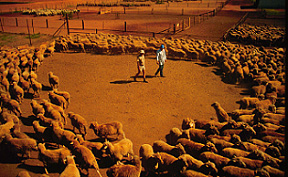
*This photo “illustrates the flight zone of a large flock of sheep, herds of cattle behave much the same way. Notice that the sheep are circling around the handlers while maintaining a safe distance and keeping the people in sight. Note that the sheep tend to move in the opposite direction of handler movement.” (Source)

** The point of balance is usually at the animal’s shoulder and it is determined by the animal’s wide angle vision. All species of livestock will move forward if the handler stands behind the point of balance. They will back up if the handler stands in front of the point of balance.

***This photo provides a bird’s eye view and allows one to see the point of balance. Where the handler is currently standing is called the point of balance because the animal will not move (if out of the flight zone). If the handler moves towards the back of the animal, behind the point of balance, the animal will move forward. If the handler moves towards the head of the animal, it will move backward.

For more information on the V Bar V Ranch visit their website here. To learn more about low-stress cattle handling visit Dr. Temple Grandin’s website.

Ranching by the Scientific Method


IMG_2391dawn
The Quarter Circle U Ranch

Another feature of the Arizona Beef blog is the chance to “Meet Your Rancher.” For our inaugural post in this series, Arizona rancher Chuck Backus of the Quarter Circle U Ranch, was an easy choice. Chuck and his wife Judy have been an integral part to the successes of a tour series we do each year entitled the “Gate to Plate” tours (more on that in later posts). He is always open to visitors and never turns us down when we ask to bring folks out to tour his ranch. Luckily for us, many have found Chuck fascinating including Steve Suther from Certified Angus Beef. A few years back, Steve wrote a blog post for the Black Ink with CAB blog about Chuck and his use of science in raising his cattle. With Steve’s permission, we are proud to repost that blog for you to enjoy. Without further ado, here is the story of Chuck and Judy and their ranch nestled in the Superstition Mountains.


IMG_2280explaining
Chuck Backus takes the scientific approach to just about everything.

Chuck Backus is one of my heroes. This Arizona rancher is a PhD nuclear engineer who began in the 1960s working with Westinghouse on NASA’s manned mission to Mars. His grandfather lived nearly a century in West Virginia with no utilities and nothing but actual horsepower. . .

ANYWAY, as Chuck would say to get back on track, the NASA work included a lot of focus on solar energy, too, and political winds suggested a move to earth-based applications. So he and wife Judy came out to The Valley of the Sun, and he helped launch Arizona State University’s solar energy program, even setting up a lab that certifies most of the solar cells in the world.

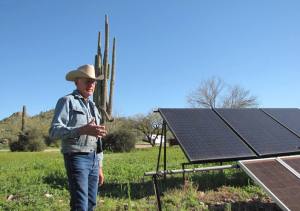
ANYWAY, he was still a farm boy from West Virginia at heart and looking for a small ranch in the 1970s…a friend in the Farm Credit System alerted him that a historic 10-acre tract was going to be foreclosed on just a few miles southeast of Phoenix. Turns out it was the Quarter-Circle U, where the first men crazy enough to try ranching many years before claimed an unlimited number of desert acres for their 5,000 cattle. By 1974, it lay up against a 22-section state lease rated for 207 cows. Wow. More than he wanted perhaps, but he saw potential for research, and by the end of that decade, he had converted all power to solar. Not long after he turned away from exploring our Solar System, he began to speak of his own solar system.

IMG_2426solar
The ranch has been operated on solar energy since the 1970s.

When the United Nations hosted seminars on solar energy around the world, Chuck presented and transfixed audiences with his documented practical applications. Even his cows were solar branded then.

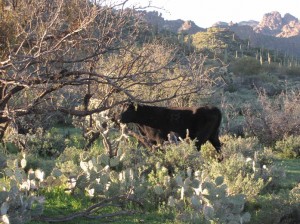
ANYWAY, cows were kind of along for the ride until he had all the solar and water issues lined up, and bought a few more acres, including a tract up north to allow his base to have six months of rest each summer, and room for 400 cows. No rest for Chuck, however. He was retiring from ASU, but chomping at the bit to dig into cattle ranching with a new emphasis on cattle quality. He thought back to the wild, rodeo-stock cows he’d had to keep on the place the first year just to show his first herd what to eat, and the huge risk of bull mortality coming into a canyon better suited to rattlesnakes than beef cattle.

IMG_2343learn-to-eat-300x224
Cows must learn what plants can sustain them, and where the water is.

Using artificial insemination (AI) to breed half of his herd cut that risk, and replacement heifers from top Angus AI sires would grow up knowing their desert resources. Chuck joined the Certified Angus Beef brand’s email discussion list called Black-Ink and added much to discussions of AI and herd improvement strategies. He knew a lot about a lot of things, but adapted the attitude of an eager student in this field.

ANYWAY, he sent a benchmark set of steers to a Texas feedlot in 2006 and found the Beefmaster and Brangus crosses made about 50% Choice, but no premium Choice. Last year, after five years of culling and breeding up and including the first stacked generations of high-quality Angus genetics, a load went 12% Prime and about 80% Certified Angus Beef brand. Wow. He’s not done yet, only halfway through a 10-year genetic upgrade that is now adding an emphasis on feed conversion. This year, a load of steers are being fed at Cattleman’s Choice Feedyard near Gage, Okla. As of today, most of Chuck’s heifers are AI-sired and include some ¾ Angus. How far can he go? Only as far as profit allows.

Eric Grant, of the American Angus Association came with me on this visit, and as I made some comment about the predictability of straightbred Angus from registered bulls, Chuck acknowledged that. But he added, “Just because you can predict the outcome, doesn’t mean it is the desired outcome, or that it maximizes your profit. This country is so rough. I am in the middle of this experiment to see if the higher percentages or straight Angus can do well here.

“If I use primarily AI to bring these super genetics in, and they are raised by my cows on this pasture, and they get all the enzymes in their system that will let them eat what is here—cactus included—if they are raised on this as a baby calf, and learn what they can eat, what they need to eat, then they should be well adapted as replacements. If they fail, it should come back to genetic reasons.”it’s not rocket science, just sound thinking.

ANYWAY, it’s not rocket science, just sound thinking. Look for the full story on the Backus Quarter-Circle U experiment in a future Angus Journal or Angus Beef Bulletin.

–Steve

Eat Beef, Keep Slim

LilDudetteThrough the years, there have been many creative methods implemented to talk about the great beef which is raised in Arizona. One of those ways, in the 1950s, was to create a mascot for Arizona beef. Reg Manning, a famous artist best known for his cartooned saguaro cactus with the prominent nose, created a character who fit the bill perfectly for this job. This cartoon character was named Lil’ Dudette, and she had a hearty message to share with everyone: “To keep yourself trim – Eat Beef – Keep Slim!”


In 1955, after using a mannequin version of Lil’ Dudette in shop windows to promote beef, it was decided a live version was needed to help spread the word at larger events like the Arizona State Fair. The Arizona State Cowbelles, a strong organization of women who share information about beef, were on a mission to find the perfect Lil’ Dudette and when a Cowbelle is on a mission (now and then) you better not stand in her way. It sounds like it was an easy decision as Connie Cook from Willcox fit the description wonderfully. The Cowbelles are even quoted as saying, “Connie looks exactly like Reg Manning’s famous character, Lil’ Dudette ‘ought to look.” Connie’s family was also deeply rooted in Arizona ranch history having been in the cattle business in Willcox since 1893. It was a perfect fit.

Lil’ Dudette, aka Connie, was a hit! She made appearances at the Arizona State Fair that year and drew a crowd. It is reported in the November 1955 issue of the Arizona Cattlelog that 10,000 “7 Ways for 7 Days” beef-recipe folders were given away and nearly 30,000 people entered into a drawing to win 25o pounds of choice beef donated by the Beef Council. In the next year, it was reported that there was a film was produced entitled, “Lil’ Dudette,” which was entered in the Beef Promotion Contest at the American National Cattlemen’s convention and it won first prize!

We can’t say Lil’ Dudette was too far off when she sang out Protein Challengeher slogan about eating beef to keep slim. Significant research shows that people looking to lose or maintain a healthy weight, support a healthy metabolism and/or age more vibrantly may benefit from consuming a balanced amount of high-quality protein, within calorie goals. Luckily for us, we have a few more tools than Lil’ Dudette did to help people achieve these goals. One of those tools being the 30 Day Protein Challenge which is a fun, step-by-step way to help you get an optimal amount of protein throughout your day. Significant research shows that some people can lose and/or maintain a healthy weight, support a healthy metabolism, and age more vibrantly when they consume more high-quality protein, within calorie goals. Interested? Check it out here.

Who’s blogging?

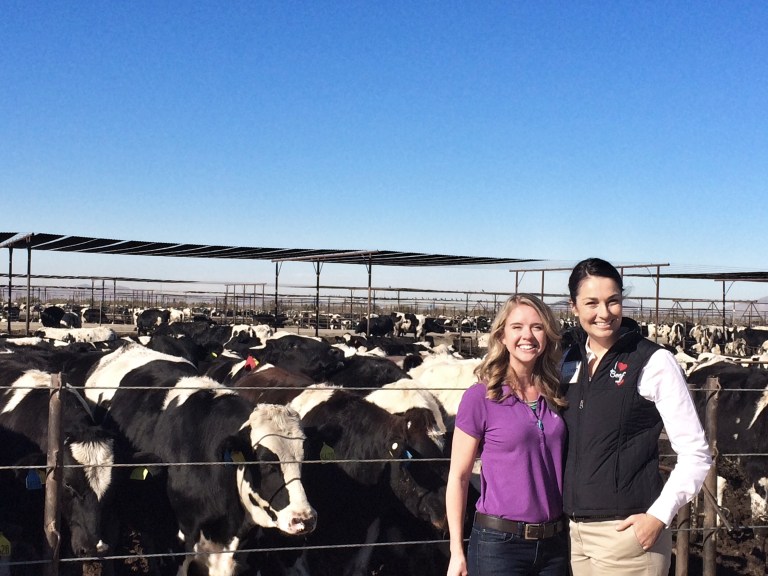
g2p cell_26_tiffany and laurenYou’re going to be meeting a lot of people coming up so we’d thought we’d start off with the staff of the Arizona Beef Council.
We, Lauren Scheller, Tiffany Selchow, and Bas Aja, execute the plans put into place each year by the Council’s board of cattlemen and women, cattle feeders and dairymen. Our goal is to let people know how great beef is and we do that by sharing the facts and bringing a little sparkle to the table (really there isn’t much you have to add to table if it’s already set with steaks).

Lauren is a beef-loving, car racing enthusiast, who enjoys making things pretty with calligraphy and bows. She was raised on her family’s beef cattle ranch in California and has adapted to and embraced all things Arizona ranging from hiking Camelback Mountain to enjoying delicious tacos across the state. On behalf of Arizona’s ranchers, Lauren works with chefs, retailers (aka where you can buy beef in the meat case), and the media to communicate about all things beef.

I, Tiffany, am a recently married, somewhat typical millennial, who can cook a mean steak but is working to increase her efficiency in the kitchen. Finding a new recipe on Pinterest
and trying it out on my husband, who is patient and eats whatever is put in front of him, is a newly found interest. My favorite project here at the Beef Council is exploring our state, one school and ranch at a time. Some of my time is spent in culinary and agriculture classrooms doing fun things like beef cooking demos, while a lot of time is spent online, sharing yummy info about beef.

We are all here as a resource to YOU! When you have a question about beef pop up, we want you ask us. See that link in the top right hand corner? It’s your direct connection to us. Give us a shout whenever a beefy question pops into your mind!

Arizona Beef Council: The What, Who, Where, When, and Why

AZ Beef Council_cactus_checkoff_color (2)Oh look, another blog for you to read on the interwebs! So the question begs to be asked, why take more of your time to cruise through our blog? Because this is where the story of Arizona beef and the ranchers and farmers who make it possible is told. It is a place to learn about a new cut of beef which may have looked intimidating at the meat case, but after reading our blog post will leave you feeling confident and ready to tackle something new. The list could go on and on!

So I’ll try to keep this from reading like your 2nd-grade current events report, but it only makes sense to give you the background of the Arizona Beef Council before we head off on our journey through Arizona and the great beef it has to offer.

The jury is out on when the Arizona Beef Council was officially founded (we have conflicting reports which point to 1955 and shortly after to 1956), but one thing is certain: the goal of this organization was and is to promote and educate about the incredible beef product Arizona ranchers work so hard to produce.

This sounds like an easy task, but once you start to break it down, LilDudetteone realizes there are many ways to accomplish this goal and vast amount of beef things to talk about. Some of the fun projects through the years have included TV and radio commercials which were aired during numerous notable shows including Bob Crosby, Edgar Bergen, Bing Crosby and Danny Thomas back in 1959. Another great project which is still functioning currently is providing money to culinary instructors to purchase and use beef in their classrooms. If you are currently an agriculture or culinary teacher and would like more info about this program and how you can get involved, check out our website. Lil’ Dudette (pictured) was another source of promotion. Her obvious appeal to the masses and tag line “To keep yourself trim, Eat beef, Keep slim” earned a large audience of receptive beef eaters. She hung out (in mannequin form) in stores and the state fair.

Check back soon. We will have an exclusive on the folks behind the scenes and then we’ll really get into the meat of this blog. Pun intended!